Owen Wilson Showed Up. Nobody Looked.
When a 26-year-old golfer outdraws a movie star, the sport has a choice: notice what it has, or keep waiting for someone easier to sell.
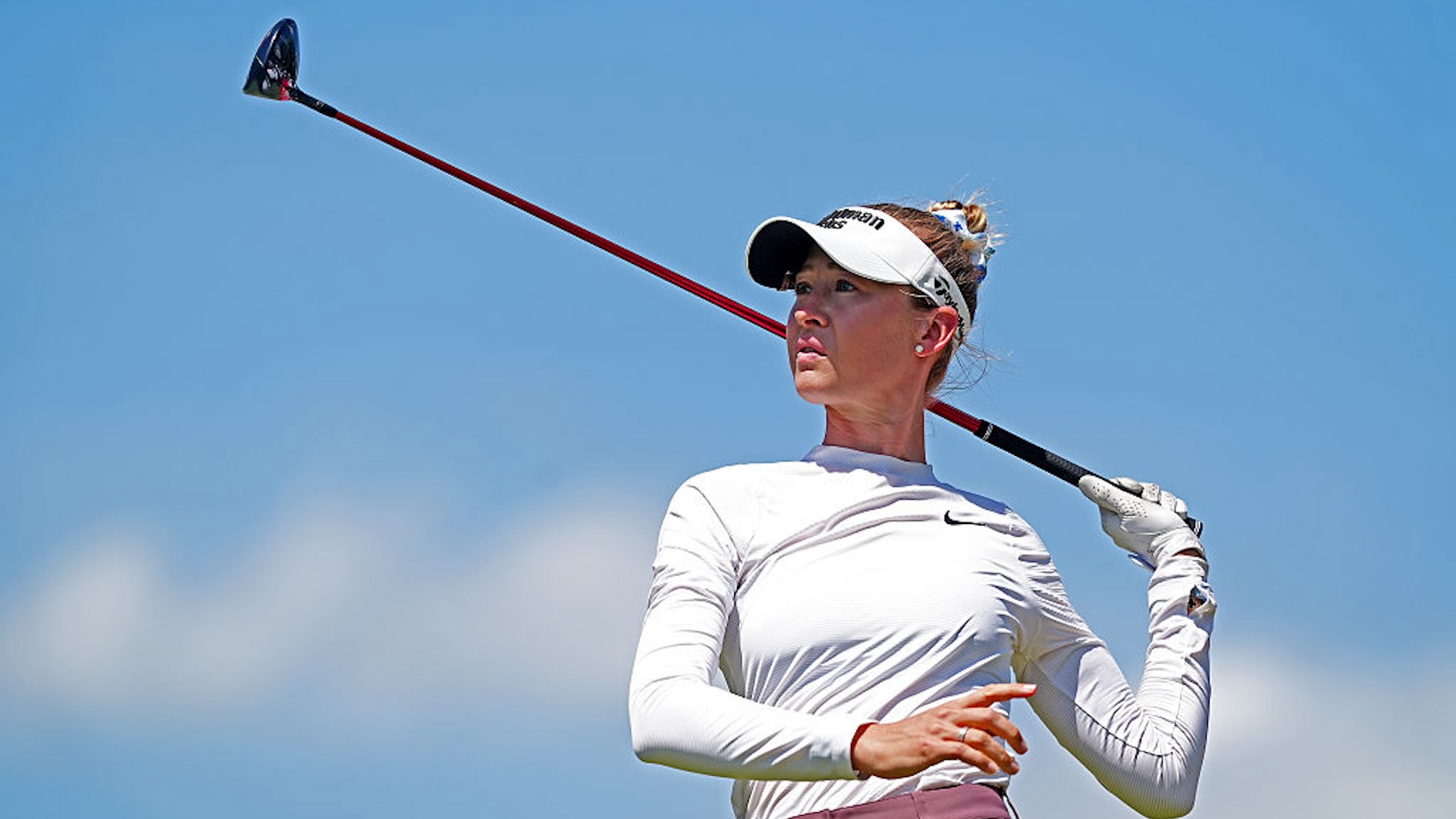
Photo · Defector
There's a version of this story that writes itself. A celebrity sighting at a major golf tournament. The cameras tilt, the gallery murmurs, someone gets a photo. The athlete nearby becomes backdrop.
That's not what happened at Riviera.
According to a writer at Defector, Owen Wilson appeared just off the ninth green during the first day of this year's U.S. Women's Open — a casual celebrity drop-in at a marquee event. One fan recognized him, told him he loved his work, and Wilson thanked the man warmly. And then the gallery went back to watching Nelly Korda.
Sit with that for a second.
The Thing Golf Keeps Not Saying
Golf has a complicated relationship with its own greatness when it comes in forms it didn't plan for. The sport has spent decades constructing machinery to amplify certain athletes — their backstories, their rivalries, their brand partnerships — while other athletes, equally or more dominant, exist in a kind of institutional silence. Not hostility. Just silence. The kind that accumulates into invisibility.
Korda is 26. She is, by any measure of the word, exceptional. And yet there's something almost uncomfortable about the Defector piece — not because the writer is wrong, but because the framing itself reveals the gap. The headline is "Nelly Korda Is Really Good At This." That's not a tribute. That's a correction. It's the kind of sentence you write when you suspect the people who should already know this don't, or won't say it plainly.
The Owen Wilson anecdote isn't a charming sidebar. It's the whole argument. Here is a woman so compelling at her craft that a recognizable movie star becomes scenery. And the question hanging in the air at Riviera — the one the Defector piece doesn't ask directly but absolutely implies — is whether golf will meet that moment or fumble it.
What Dominance Actually Costs
There's a particular tax that dominant athletes pay when the sport around them hasn't built the infrastructure to handle their dominance. The coverage lags. The narrative hasn't caught up. People are still explaining who you are in the third paragraph of every article. You win, and the story is still somehow provisional — like the sport is waiting to see if you'll do it again before it commits.
I've watched this happen across enough sports to recognize the pattern. Excellence that arrives without the right marketing architecture around it tends to exist in a weird half-light. The results are undeniable. The cultural footprint doesn't match. And the athlete, if they're serious — and Korda is serious — just keeps working, because what else are you going to do.
The gallery at Riviera wasn't indifferent. They were there. They chose her over a movie star without even making it a choice. That's not nothing. That's actually the sport's audience doing what the sport's institutions often fail to do: paying attention to what's actually happening in front of them.
What a Face Requires
Generational shifts in sports need faces. Not spokespeople — faces. People whose way of competing becomes the thing you describe when you're trying to explain to someone why they should care. The sport doesn't hand you that status. You accumulate it through repetition, through moments that stack until they become mythology.
The mythology around Korda is being built right now, in real time, partly by writers at outlets like Defector who feel the need to state the obvious because the obvious keeps getting overlooked. That's a strange position for a piece to occupy — equal parts celebration and frustration. Look at this person. Are you looking?
What makes the Riviera scene stick isn't the celebrity cameo. It's the crowd's instinct. Whatever apparatus surrounds a sport — the broadcast deals, the sponsorships, the media cycles — it can't fully override what a live gallery does when someone exceptional is nearby. People gravitate. They rearrange themselves. They stop looking at their phones.
The sport now has to decide what it does with that gravitational pull. It can build around it, amplify it, let it become the thing that brings new people in. Or it can keep treating Korda's dominance as a fact to be reported rather than a story to be told.
One of those options has a future. The other just has results.
Keep reading sports.

ESPN Named Him. Then Unnamed Him. Nobody's Explaining the Gap.
A retraction without a reckoning is just a deleted link.

Three People Died Celebrating. FIFA Hasn't Said Their Names.
Mexico City buried three people after the World Cup crowds came through. At some point, the sport has to sit with that.

Sell the Stadium, Lose the Room
NFL franchises are rolling out the welcome mat for World Cup tourists — and the desperation is showing.
From the other desks.

800 Horsepower, One Ton of Doubt
Lamborghini built the most powerful SUV it's ever made. It's also slower than what it replaced.

Gold Leaf on a Lacquer Dial, and the Weight of What That Costs
Awake's Frosted Leaf Royal Blue asks a question Vietnamese craft has never quite had to answer at this price.

Hide My Email Has Been Showing Your Email
Apple's privacy flagship has a hole in it. They've known for over a year.