Rachel Entrekin Won 250 Miles. Science Showed Up to Take Credit.
A woman wins one of the most brutal ultras on the calendar, and suddenly her biology is the story — which tells you everything about how we've been watching.
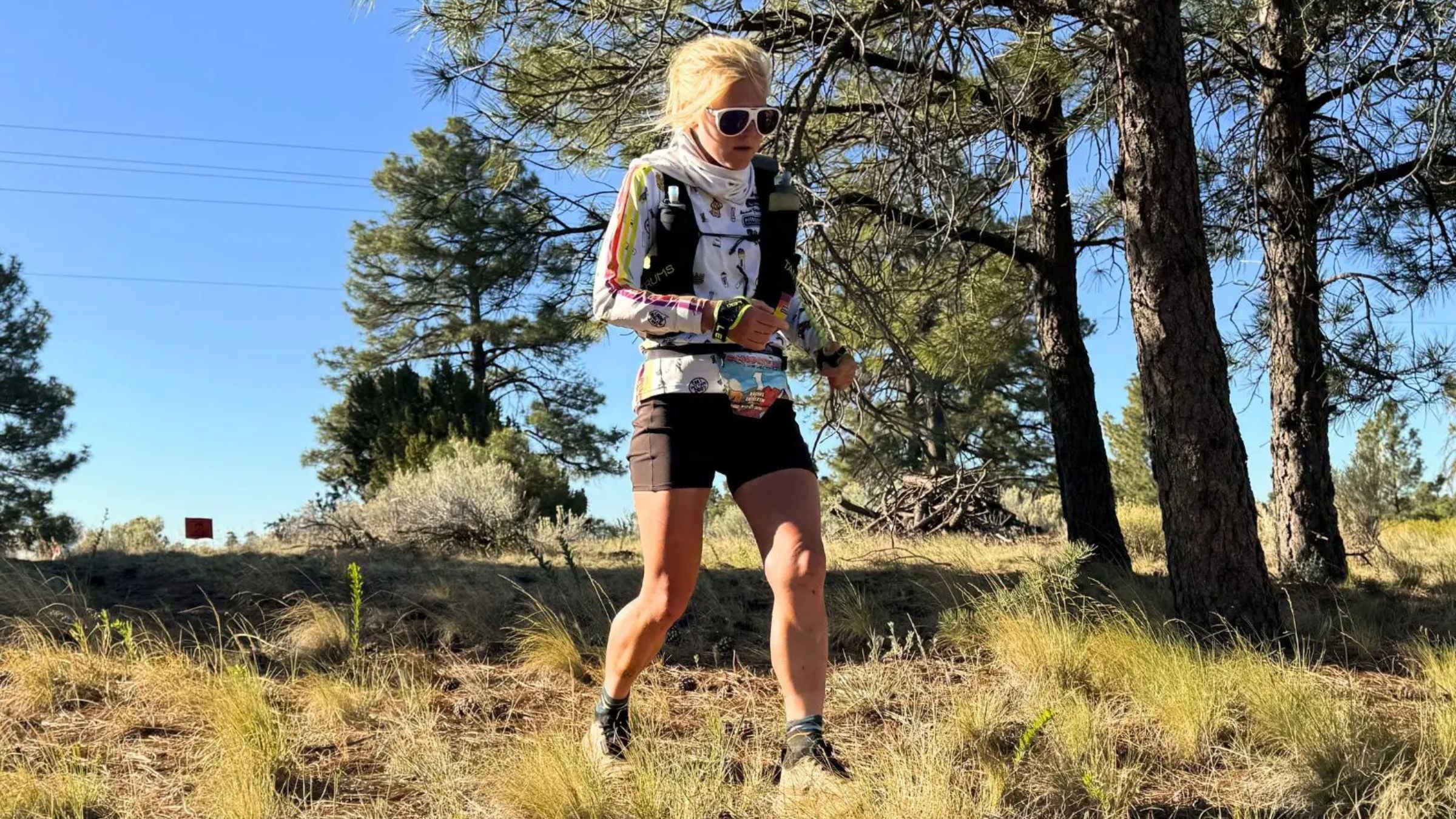
Photo · Outside Online
The Finish Line Isn't the End of Anything
Picture the moment: 250 miles of Arizona desert, heat and dark and rock and silence, and at the end of it, Rachel Entrekin crosses a finish line. That should be the whole story. The miles, the will, the body that carried her through all of it. But the moment the result circulated, something else arrived alongside it — a theory, a framework, a scientific permission slip. Of course she won. Women are built for this.
Outside Online has published a piece asking whether women resist fatigue better than men, pegged to Entrekin's win at the Cocodona 250. The piece acknowledges, plainly, that physiology isn't why she won. And yet the question gets asked anyway. Which is its own kind of answer.
I keep coming back to that framing. Not because the science is uninteresting — it isn't — but because of the sequencing. A woman wins something extraordinary, and the immediate cultural instinct is to find the mechanism. To locate the result in the body rather than in the person. To make the achievement, however inadvertently, a data point.
What the Science Actually Says
The Outside Online piece engages seriously with emerging research suggesting female physiology may offer certain advantages in ultra-endurance contexts. Fatigue resistance. Recovery dynamics. The body's relationship to sustained effort over very long durations. This is real science, still developing, and worth taking seriously on its own terms.
But notice what happens when you bolt that science onto a specific athlete's specific win. Entrekin didn't just beat a course — she beat conditions, competitors, doubt, and whatever the desert threw at her across 250 miles. Reducing any of that to hormonal advantage is the kind of move that sounds like praise and functions like diminishment. It locates the win outside her agency. It says: your body did this, when the more honest and more interesting thing to say is: you did this, and your body was yours to use.
The writer at Outside Online seems to understand this tension. The piece doesn't claim physiology explains the result. It asks whether any of this matters. That's a genuinely careful question. But the fact that it needs to be asked at all — the fact that a woman winning an ultra immediately summons the biology conversation — reveals something the science can't answer.
The Longer Race
Women's endurance sports have spent decades in a specific kind of purgatory: not excluded outright, but not quite taken on their own terms either. The performance existed. The recognition lagged. And when recognition came, it often came attached to an asterisk — a separate category, a smaller prize, a qualifier that reminded everyone the real race was somewhere else.
What's shifting now, and what makes this Outside Online piece worth examining, is that the conversation about female physiology is finally being conducted with something approaching scientific seriousness. For a long time, the prevailing assumption was deficit: women were slower, lighter, less powerful, and those facts arranged themselves into a hierarchy. Now there's evidence that certain long-duration events might map differently onto female physiology — that the longer the race, the more the gap closes or inverts.
That's a genuine reorientation. It matters. And it also creates a new trap.
Because if female athletic performance was historically explained by limitation — she can only go this fast, this far — there's a risk that the corrective move is simply to swap in a different biological story. She can go this far because of how she's built. The athlete is still an expression of her body. The body is still doing the talking. The person, the training, the decisions made across years of preparation — those stay in the background.
What Winning Actually Requires
The Cocodona 250 is 250 miles. The number sits there and resists metaphor. There's no clever way to make it feel smaller or more manageable. You don't finish a race like that on physiology alone, advantageous or otherwise. You finish it on something that doesn't show up in a blood panel.
The Outside Online piece doesn't pretend otherwise. But the piece exists because Entrekin won, and Entrekin winning made the biology question feel newly urgent, newly publishable. That's the loop worth examining: achievement unlocks theory, theory reframes achievement, and somewhere in that cycle the person gets a little blurry.
I'm not arguing against the science. I'm arguing for the order of operations. Start with what happened — a woman ran 250 miles through the Arizona desert and won — and let that be the fact that organizes everything else. The physiology research is context. It's interesting context. But it's not the story.
The story is that she went 250 miles and nobody else went further.
Let her own that before the explanation arrives.
Keep reading sports.

ESPN Named Him. Then Unnamed Him. Nobody's Explaining the Gap.
A retraction without a reckoning is just a deleted link.

Three People Died Celebrating. FIFA Hasn't Said Their Names.
Mexico City buried three people after the World Cup crowds came through. At some point, the sport has to sit with that.

Sell the Stadium, Lose the Room
NFL franchises are rolling out the welcome mat for World Cup tourists — and the desperation is showing.
From the other desks.

800 Horsepower, One Ton of Doubt
Lamborghini built the most powerful SUV it's ever made. It's also slower than what it replaced.

Gold Leaf on a Lacquer Dial, and the Weight of What That Costs
Awake's Frosted Leaf Royal Blue asks a question Vietnamese craft has never quite had to answer at this price.

Hide My Email Has Been Showing Your Email
Apple's privacy flagship has a hole in it. They've known for over a year.