San Diego Just Moved the Mountain
For generations, Black athletes built the wealth. Now someone gets to own it.
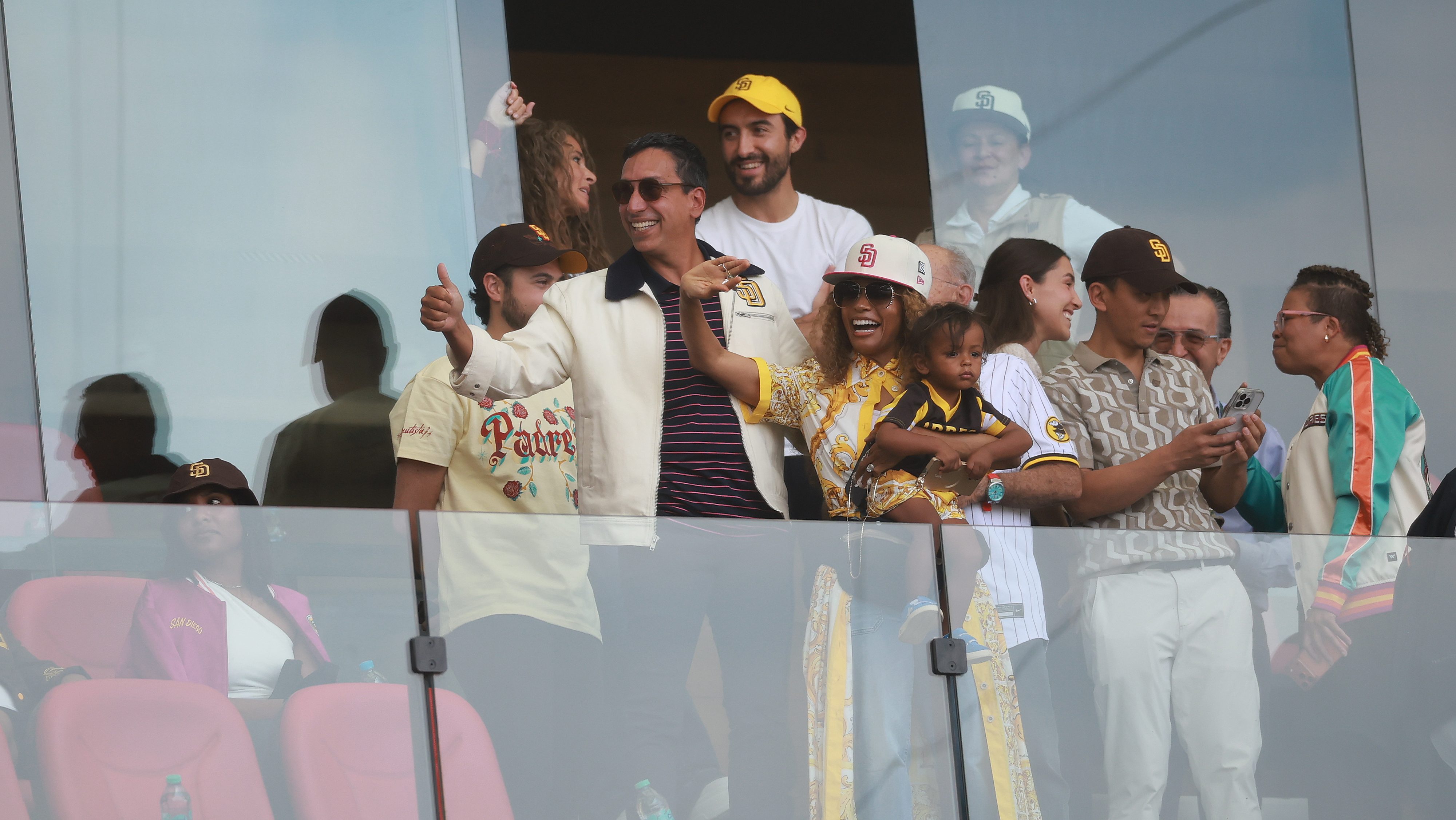
Photo · Andscape
The Math Nobody Could Ignore
Think about what it takes to get to the table. Not just the money — though it's an almost incomprehensible sum, the kind of number that turns a franchise into an abstraction. Think about the credibility required. The relationships. The decades of someone deciding, quietly and without malice or drama, that the table simply wasn't set for you. That's not a conspiracy. That's just how mountains stay mountains. Nobody has to push you off. They just have to never hand you the gear.
A writer at Andscape opens their piece on the Padres sale with a verse from Proverbs: Where there is no vision, the people perish. It's a striking choice. Not a stat. Not a quote from a commissioner. Scripture. Because what they're describing isn't a transaction — it's a correction. And corrections of this magnitude don't arrive through spreadsheets. They arrive through someone, somewhere, refusing to accept that the view from the top was never meant for them.
The piece frames Black team ownership as the next frontier in American sports. Not a milestone on the way to something else. The frontier. The place where the map runs out and someone has to decide whether to turn back or keep walking.
What the Bodies Built
There's a specific tension at the center of this story that the Andscape writer names directly: Black bodies have generated enormous wealth for sports teams and leagues. That's not editorializing. That's just accounting. You watch the rosters. You watch the arenas. You watch where the electricity in the room comes from on a given Tuesday night in February, and then you look at who holds the deed to the building.
Ownership has been the economic and cultural mountain, as the piece puts it, that has largely remained out of view. Not out of reach in the way a thing is out of reach when you simply can't afford it. Out of view — which is different, and more insidious. You can't climb toward something you've been conditioned not to see as a destination.
I keep coming back to that framing. Out of view. Because there's a particular kind of gatekeeping that doesn't announce itself. It operates through norms. Through networks. Through who gets to be in the room when the next deal is being assembled, and who gets called when the last deal is being celebrated. The Padres sale, the way the writer at Andscape tells it, is a full-circle moment for Black baseball specifically — and for that reason it lands as something larger than one franchise changing hands.
What Changes When the Deed Changes Hands
Here's what I think is actually at stake, beyond the symbolism: once wealth transfer in sports becomes possible in this direction, it stays possible. That's how precedent works. The mountain doesn't disappear, but it gets smaller with every person who makes it to the top and turns around to say: I was here. I made it. The path exists.
Sports ownership shapes franchises across decades. It determines where teams play, how they're run, who gets hired to coach and manage and scout, what a team means to a city, what stories get told about it. Owners build legacies. They name things. They leave marks that outlast any single player's career. When a community has been a foundational part of a sport's identity — on the field, in the stands, in the cultural fabric that makes a sport feel like something — and that community has never held the deed, the absence is its own kind of statement.
The sale the Andscape writer is covering represents a breach in that absence. A visible one. And visibility, as the scripture they chose implies, is not a small thing. Vision is where it starts.
What Comes After the Mountain
There will be a version of the conversation that reduces this to representation optics — a checkbox, a feel-good story for a slow news cycle. That version misses everything. What's actually happening is a structural shift in who gets to accumulate intergenerational sports wealth. Franchises appreciate. They get passed down. They become assets that fund the next generation's ambitions, and the generation after that.
The writer at Andscape is right to treat this as a frontier moment rather than an endpoint. Because frontiers are complicated. They're full of new terrain, new rules, new tests of whether the people who finally made it in get to stay — or whether the systems around them simply find quieter ways to resist.
But you can't cross a frontier you can't see. And someone just made it visible.
Keep reading sports.

ESPN Named Him. Then Unnamed Him. Nobody's Explaining the Gap.
A retraction without a reckoning is just a deleted link.

Three People Died Celebrating. FIFA Hasn't Said Their Names.
Mexico City buried three people after the World Cup crowds came through. At some point, the sport has to sit with that.

Sell the Stadium, Lose the Room
NFL franchises are rolling out the welcome mat for World Cup tourists — and the desperation is showing.
From the other desks.

800 Horsepower, One Ton of Doubt
Lamborghini built the most powerful SUV it's ever made. It's also slower than what it replaced.

Gold Leaf on a Lacquer Dial, and the Weight of What That Costs
Awake's Frosted Leaf Royal Blue asks a question Vietnamese craft has never quite had to answer at this price.

Hide My Email Has Been Showing Your Email
Apple's privacy flagship has a hole in it. They've known for over a year.