The Debt Finally Paid
A writer at Defector staked out the take that Wout van Aert's Paris-Roubaix win isn't a triumph — it's a correction.
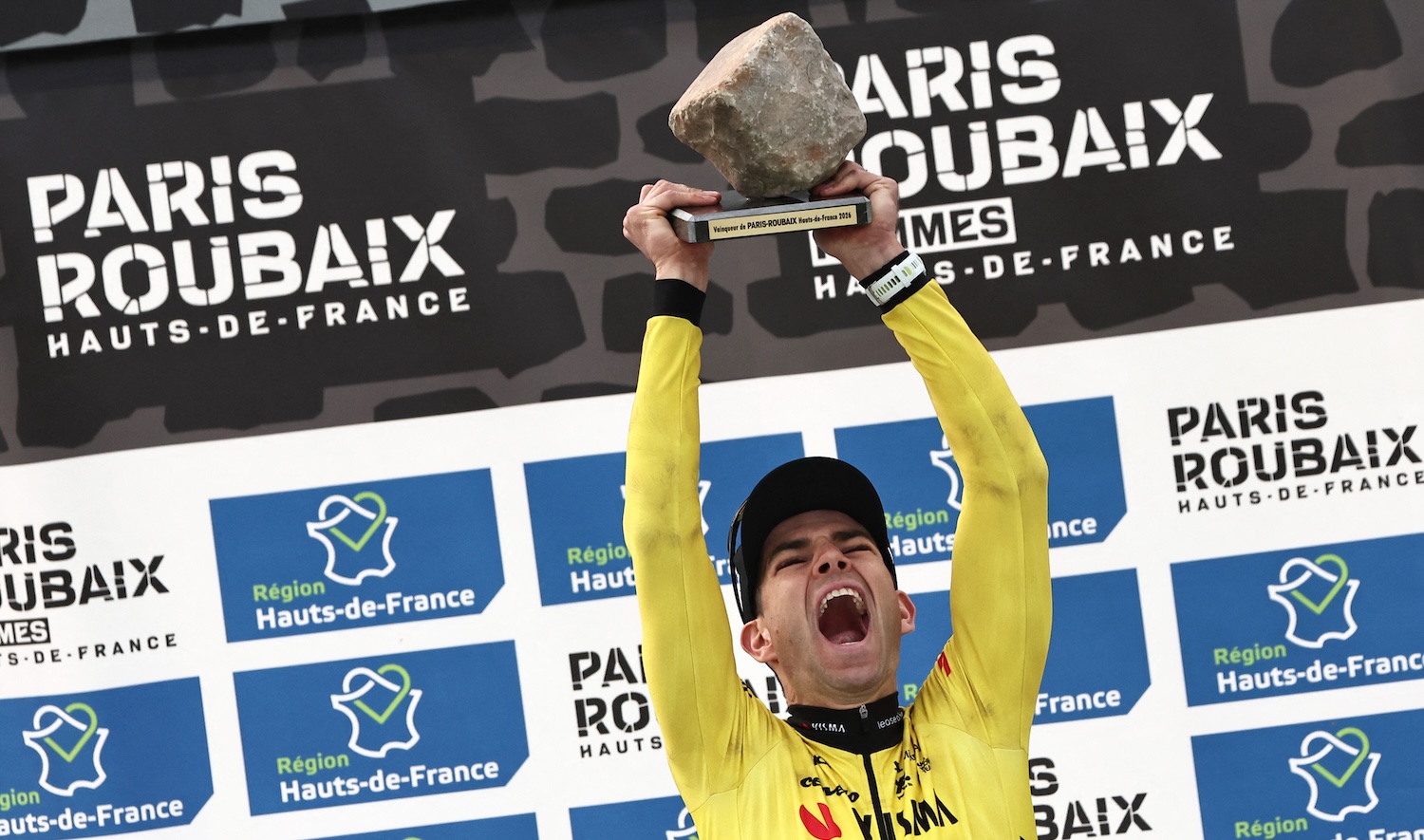
Photo · Defector
The Shape of a Career Before It's Finished
Think about how many times you've watched someone talented — genuinely, obviously talented — get chewed up by circumstance. Not beaten. Not outclassed. Just... interrupted. A crash here. A mechanical there. The wrong moment, the wrong Sunday, the wrong alignment of forces entirely outside their control. You start to wonder, after enough of those, whether the universe is indifferent or whether it's specifically, personally hostile.
That's the frame a writer at Defector brought to Wout van Aert's win at Paris-Roubaix. And the frame is worth sitting with, because it's not the usual frame. The usual frame is triumph — the athlete ascending, the crowd roaring, the arc completing. What this piece does instead is something more honest and more unsettling: it names the thing that almost wasn't. It looks at the career that existed before Sunday and calls it what it was. A testament to entropy.
That word — entropy — is doing a lot of work. And it earns it.
What Entropy Actually Means in Sport
The piece makes a specific and pointed case. Before this win, van Aert had never taken either of the two biggest one-day races on the calendar. Not for lack of talent. Not for lack of finishing in the top ten, repeatedly, at the race that matters most to him and to Belgian cycling collectively. But crashes. Mechanicals. Injuries timed with a cruelty that starts to feel almost authored. And something else the piece names that I find genuinely interesting: occasionally being a victim of his own strength — the kind of rider, apparently, that nobody would work with.
That last part is the one that sticks. There's a particular loneliness to being too good in the wrong direction. To having a capability set so complete that it threatens everyone around you. That's not a cycling problem. That's a human problem. The person in the room who can do everything sometimes ends up doing nothing, because the room reorganizes itself around the threat.
What the Defector writer is really arguing is that van Aert's career had begun to calcify around its own absence. That the inability to win Paris-Roubaix — this race, specifically, the one that matters most to him personally — was on its way to becoming the first line of his obituary. Not the wins. Not the talent. The gap.
I keep coming back to how accurate that is as a description of how sports memory works. We remember the shape of what didn't happen almost as clearly as what did.
The Correction
Here's what's interesting about the existence of this take, published now, in this moment: it's not a victory lap piece. It's a reckoning piece. The writer isn't celebrating so much as exhaling — releasing something that had been held tense for a long time.
That distinction matters. A celebration piece says: look what he did. A reckoning piece says: look what almost wasn't. The Defector piece is firmly in the second category, and that's the braver choice, because it requires admitting how close the other version of this story came to being the permanent one.
Sports writing defaults to narrative tidiness. The arc completes, the hero wins, the crowd goes home satisfied. What's harder to write — and what this piece attempts — is the acknowledgment that the arc almost didn't complete. That for a long time, the story was pointing somewhere darker. That talent and entropy were in a genuine contest, and entropy was, for a while, winning.
Van Aert won Paris-Roubaix on Sunday. That's the fact. But the Defector writer is making a claim that goes beyond the fact: that this win is less an addition to a career and more a correction to one. A rewrite of the first line that was being drafted without anyone's permission.
What We Do With the Almost
I think about the careers that didn't get the correction. The ones where the entropy won and the first line stayed dark. There are plenty of them. Cycling has more than its share, because cycling is a sport that seems to actively enjoy punishing its most gifted practitioners at the worst possible moments. But every sport has them. Every field has them. The person who was right there, who had everything, who just kept getting interrupted by forces that didn't care about narrative justice.
What the Defector piece is really a meditation on — underneath the cycling, underneath the cobblestones and the mechanicals and the Belgian crowd — is the question of whether talent is enough. Whether showing up, repeatedly, with the ability to win, eventually gets rewarded. Or whether the universe really is just indifferent.
Sunday said: sometimes the debt gets paid.
That's not a guarantee. It's not a lesson. It's just one data point, stubborn and real, against the idea that entropy always wins.
Sometimes the first line gets rewritten. Sometimes you get to watch it happen in real time, on a Sunday, on cobblestones, in Belgium.
Keep reading sports.

ESPN Named Him. Then Unnamed Him. Nobody's Explaining the Gap.
A retraction without a reckoning is just a deleted link.

Three People Died Celebrating. FIFA Hasn't Said Their Names.
Mexico City buried three people after the World Cup crowds came through. At some point, the sport has to sit with that.

Sell the Stadium, Lose the Room
NFL franchises are rolling out the welcome mat for World Cup tourists — and the desperation is showing.
From the other desks.

800 Horsepower, One Ton of Doubt
Lamborghini built the most powerful SUV it's ever made. It's also slower than what it replaced.

Gold Leaf on a Lacquer Dial, and the Weight of What That Costs
Awake's Frosted Leaf Royal Blue asks a question Vietnamese craft has never quite had to answer at this price.

Hide My Email Has Been Showing Your Email
Apple's privacy flagship has a hole in it. They've known for over a year.