They Came for the Gossip and Missed the Revolution
The WNBA draft finally had a real No. 1 debate — and the media spent it looking at the wrong thing.
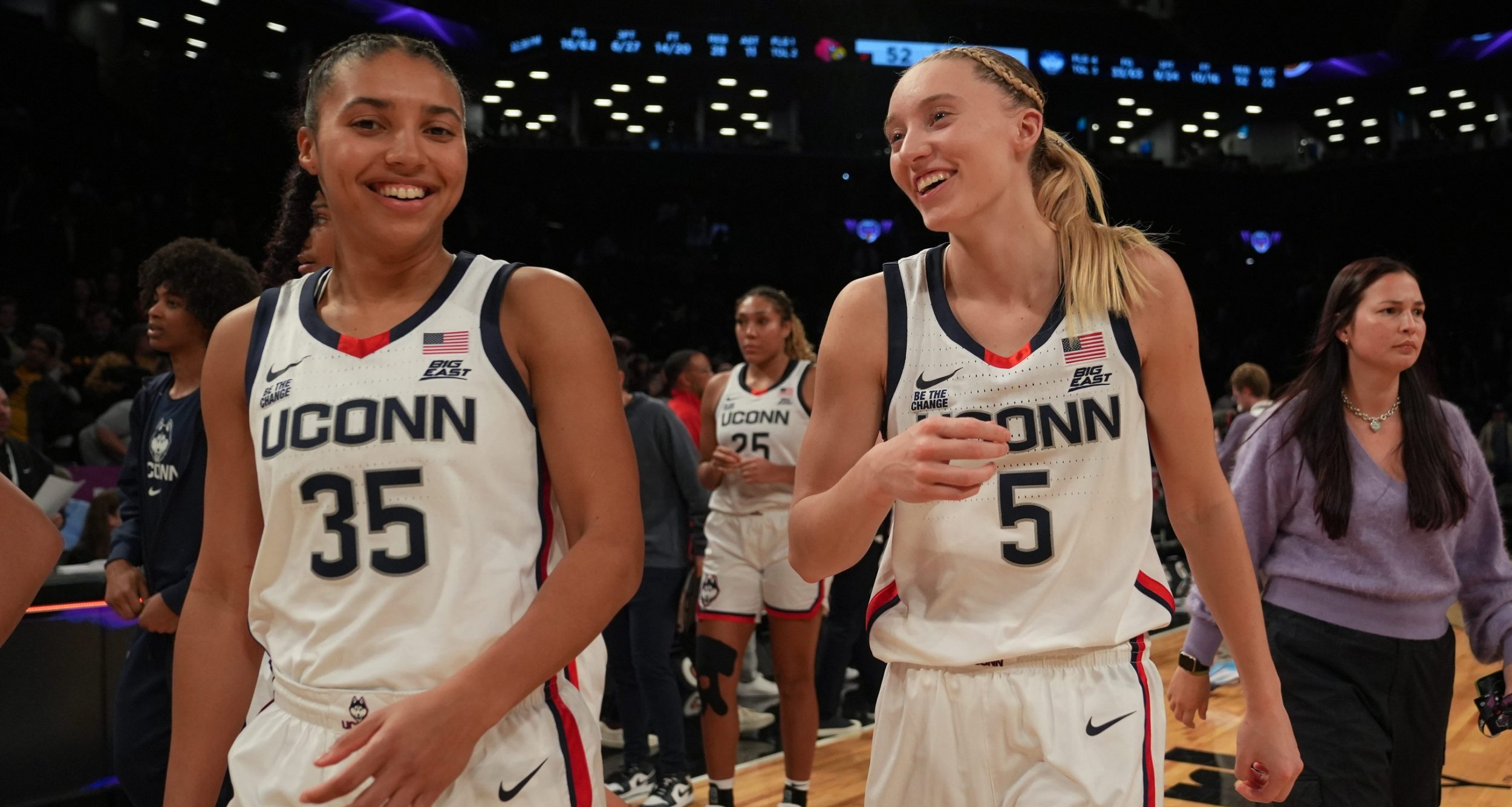
Photo · Awful Announcing
For the first time in recent memory, nobody knew who was going first.
That's the sentence worth sitting with. Not the relationship speculation. Not the drama around who sat where in the crowd. The actual news — that the WNBA draft had arrived at a moment of genuine uncertainty at the top — somehow got buried under a pile of gossip that said more about the people doing the burying than the athletes being covered.
The Dallas Wings held the No. 1 pick. They used it on Azzi Fudd, the 23-year-old who distinguished herself at UConn under Geno Auriemma, including winning a national championship in 2025. The Guardian described the moment as pure: Fudd onstage with commissioner Cathy Engelbert, nervous and delighted, beaming at family and teammates, working through the ESPN interview. A person at the beginning of something.
And then the conversation shifted. Because Paige Bueckers — Fudd's former UConn teammate, who would be picked in the same draft by Dallas — was also in the room. And apparently that was more interesting to some corners of the media than the fact that the league had just produced a draft class deep enough to make the top selection genuinely contested.
The Question Nobody Asked
Jeff Pearlman, per Awful Announcing, publicly questioned why WNBA reporters weren't pursuing the reported romantic relationship between Fudd and Bueckers. The framing assumed that ignoring it was a failure of journalism. The Guardian took the opposite view — that the obsession with it was the failure, a lens that reduces two athletes to a storyline rather than reckoning with what they actually accomplished.
The Guardian's read is the right one. And here's why the stakes are higher than one draft night:
When the No. 1 pick is genuinely debatable, it means the talent pool has deepened. It means the league is no longer so thin at the top that generational ability alone determines the order. That's not a minor footnote — that's a structural shift, the kind that takes years to build and deserves to be named out loud. Instead, a chunk of the coverage couldn't get past who might be dating whom.
What the Distraction Costs
The gossip instinct isn't random. It follows a familiar pattern: when women's sports reach a moment of genuine complexity — athletic, strategic, institutional — some portion of the media retreats to the personal. It's not malicious, necessarily. It's just a failure of imagination. An inability to see the bigger story because the smaller one feels more familiar.
Fudd's draft moment was earned. A national championship. A No. 1 pick. A league finally crowded enough with talent that her selection wasn't a foregone conclusion months in advance. That's a career arc worth tracing. That's a story.
Bueckers, picked in the same draft by the same franchise, brings her own weight to this. Two former teammates, both elite, both now professionals in the same city. The actual drama — competitive, professional, human — is sitting right there on the surface. You don't have to invent anything.
The WNBA doesn't need the media to protect it. It needs the media to pay attention to the right things.
Fudd walked onstage and the league's depth walked with her. That was the story. Some people just couldn't stop looking past it.
Keep reading sports.

ESPN Named Him. Then Unnamed Him. Nobody's Explaining the Gap.
A retraction without a reckoning is just a deleted link.

Three People Died Celebrating. FIFA Hasn't Said Their Names.
Mexico City buried three people after the World Cup crowds came through. At some point, the sport has to sit with that.

Sell the Stadium, Lose the Room
NFL franchises are rolling out the welcome mat for World Cup tourists — and the desperation is showing.
From the other desks.

800 Horsepower, One Ton of Doubt
Lamborghini built the most powerful SUV it's ever made. It's also slower than what it replaced.

Gold Leaf on a Lacquer Dial, and the Weight of What That Costs
Awake's Frosted Leaf Royal Blue asks a question Vietnamese craft has never quite had to answer at this price.

Hide My Email Has Been Showing Your Email
Apple's privacy flagship has a hole in it. They've known for over a year.