When Tony Hawk Stopped, Everyone Had to Decide What That Meant
A 2022 crash didn't just change how skateboarding's greatest figure moves through the world — it changed what we're allowed to ask of him.
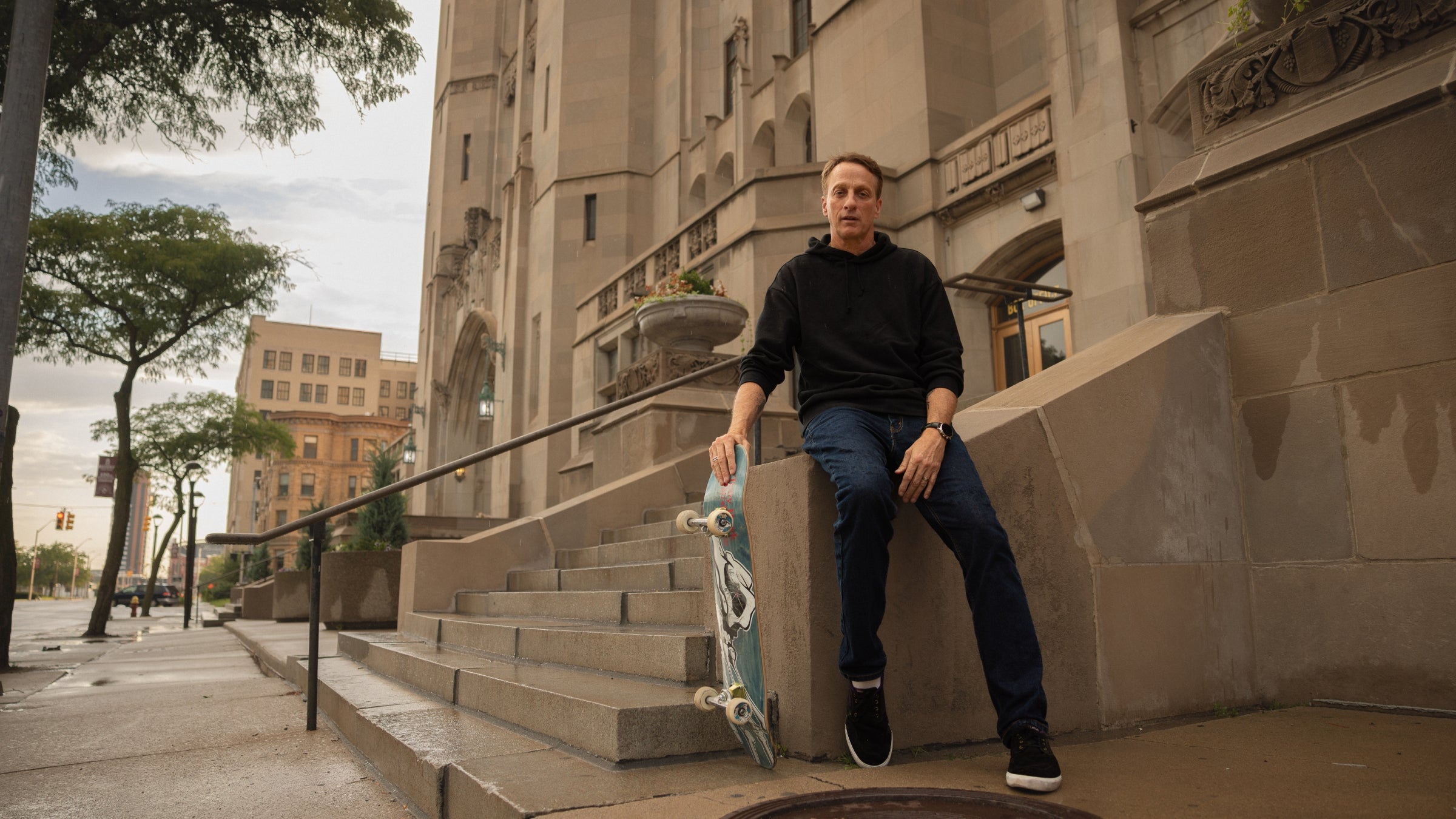
Photo · Outside Online
The Permission Nobody Granted
There's a version of this story that writes itself cleanly. Aging legend takes a fall, gets humbled, learns to listen to his body, finds grace in the slowdown. The arc is tidy. The lesson lands warm. Everyone goes home feeling something uncomplicated.
Outside Online didn't write that story. What they published is stranger and more honest than that — a portrait of Tony Hawk reckoning, in real time, with what it costs to keep being Tony Hawk. A writer there sat with him after a 2022 injury that, by the account, forced a genuine shift: not just in how he trains or what tricks he attempts, but in how he thinks about risk itself. The relationship changed. That's the phrase that keeps echoing. Not the body, not the board. The relationship.
I find myself returning to that framing because it's doing a lot of work.
What the Fall Actually Broke
The injury happened in 2022. The piece exists in 2025, or thereabouts, which means Hawk has had time to process it into something quotable, something shaped. That's not a criticism — it's just how public figures metabolize their hardest moments. By the time they're talking about it, it's already a story they've told themselves enough times to tell you.
What's interesting is that the Outside Online piece doesn't seem to let him fully escape into the clean version. The reporting surfaces tension: the GOAT still wants to push, still identifies as someone who pushes, but the 2022 crash installed a new variable in the equation. Call it awareness. Call it consequence. Call it age. He's in his mid-fifties. The body's margin for error has been quietly shrinking for years, and the fall made that margin legible in a way that's hard to un-see.
Skateboarding is unusual among action sports in that its defining figure never really left. He didn't retire to commentary or consulting. He kept skating. That continuity — that refusal to step back — has been both his gift to the culture and, possibly, the thing that made 2022 feel like more than a bad day at the park.
Because when Tony Hawk crashes, it's not just an athlete getting hurt. It's an argument about what's possible — about what the sport can still ask of a human body after five decades — suddenly losing a data point.
The Spreadsheet Nobody Wants to See
Here's what makes the Outside Online take worth sitting with: it's being written at all.
For most of Hawk's career, the story was trajectory — the 900, the video game, the cultural ubiquity, the ongoing proof that he remained capable. The media apparatus around him ran on that fuel. Every clip, every appearance, every gray-templed aerial was evidence. He was the counter-argument to decline, in motion.
A piece about recalibration is a different kind of story. It's not a fall-from-grace narrative, which would be cruel and wrong. It's something subtler: an acknowledgment that even the most durable legends eventually enter a phase where managing what they have becomes as important as expanding it. Where the relationship with risk shifts from acquisition to negotiation.
The question the piece raises — without quite answering it, which is wise — is whether Hawk's legacy can carry that shift. Whether the people who grew up watching him, who built some version of their own courage on his, can hold two things at once: the icon who redefined what skateboarding could be, and the person in his mid-fifties who now has to think differently about a 15-foot drop.
I think most of them can. I think most of us can. But it requires something from an audience that sports rarely demands — the willingness to let the figure you've mythologized become human on a timeline they didn't choose.
What We're Really Being Asked
The reason this piece lands differently than a typical athlete-aging story is that Hawk was never supposed to be mortal in the conventional sports sense. He didn't have a career that ended with a trade or a contract dispute or a slow statistical fade. He just kept skating. The legend was built on persistence as much as brilliance.
So when Outside Online publishes a piece about him recalibrating his relationship with risk, it's not elegiac, exactly. It's something more uncomfortable. It's the moment when the story you've been telling about someone has to update its own premise.
I've watched people do this with athletes they love. The denial phase, where every sign of limitation gets explained away. Then the grief phase, which is really about themselves — about what they've invested in the idea of this person. Then, if they're lucky, something quieter: respect for whoever the athlete actually is now, rather than mourning who they were.
Tony Hawk crashing in 2022 and then sitting down to talk honestly about what it changed — that's not a diminishment. It's a different kind of courage than the 900 ever was. The 900 was about what a body could do. This is about what a person can admit.
The sport will keep asking impossible things of the young. It always has. What it doesn't always get is a legend willing to say, publicly, that the asking has limits — and to keep showing up anyway.
Keep reading sports.

ESPN Named Him. Then Unnamed Him. Nobody's Explaining the Gap.
A retraction without a reckoning is just a deleted link.

Three People Died Celebrating. FIFA Hasn't Said Their Names.
Mexico City buried three people after the World Cup crowds came through. At some point, the sport has to sit with that.

Sell the Stadium, Lose the Room
NFL franchises are rolling out the welcome mat for World Cup tourists — and the desperation is showing.
From the other desks.

800 Horsepower, One Ton of Doubt
Lamborghini built the most powerful SUV it's ever made. It's also slower than what it replaced.

Gold Leaf on a Lacquer Dial, and the Weight of What That Costs
Awake's Frosted Leaf Royal Blue asks a question Vietnamese craft has never quite had to answer at this price.

Hide My Email Has Been Showing Your Email
Apple's privacy flagship has a hole in it. They've known for over a year.