Hyundai Built a Tesla Screen and Then Put Buttons on It
Pleos Connect borrows the aesthetic and buries the ideology — which tells you everything about where the industry actually landed.
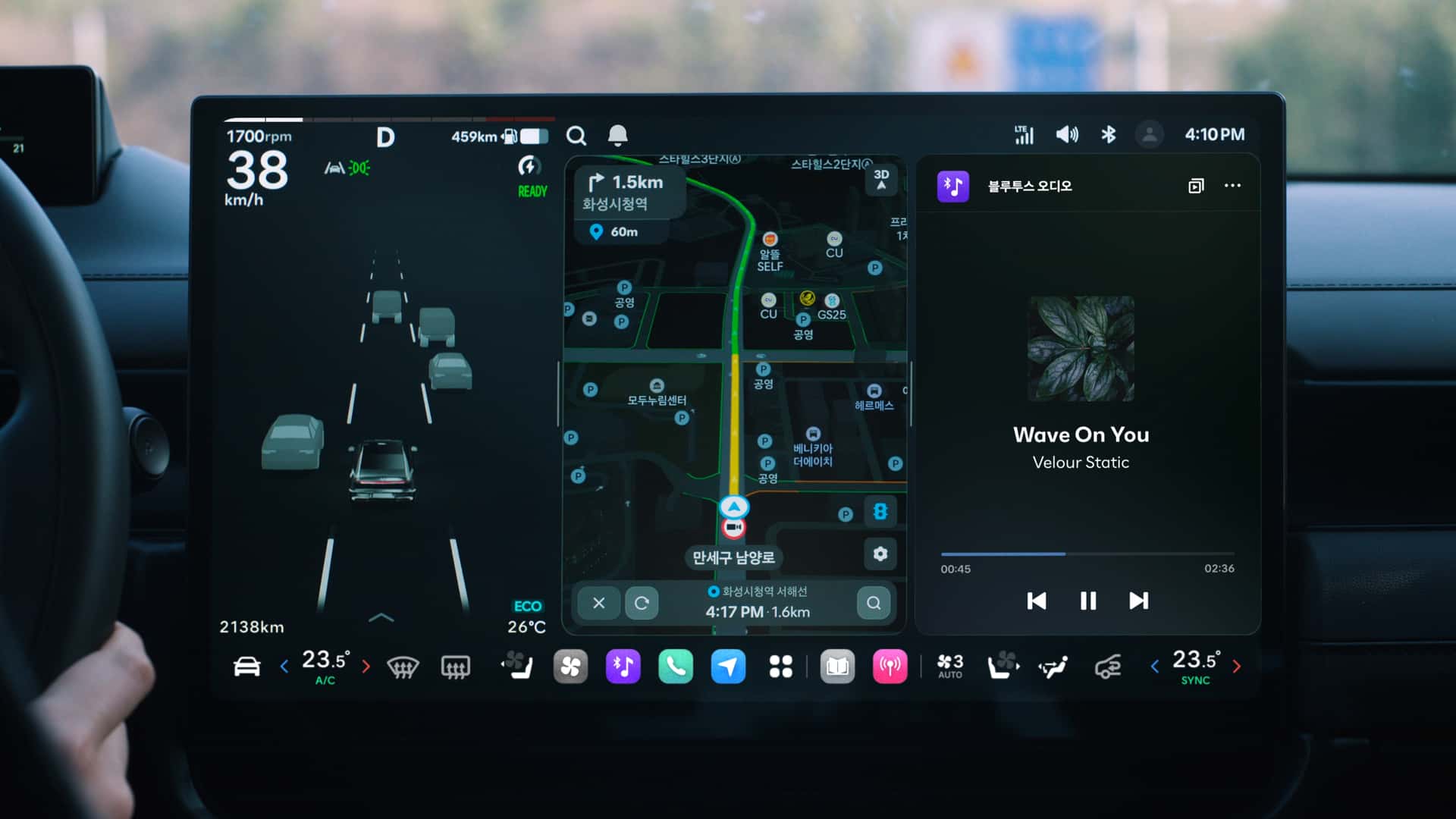
Photo · InsideEVs - Articles
There's a moment in every design trend where someone builds the thing that proves the trend was wrong. Hyundai just did it, and they had the nerve to make it look like a compliment.
Pleos Connect — debuting next month, according to InsideEVs — arrives with the wide dual-screen layout that Tesla made culturally dominant and an AI companion that positions it squarely in the current moment. On first glance, the visual language is familiar: horizontal expanse, clean surfaces, the suggestion that this machine thinks. Carscoops clocked it immediately, noting the resemblance to Tesla's interface in the same breath they pointed out what was different. Electrek went further, framing the entire system around that one key distinction.
The distinction is buttons. Physical ones. Kept, not added back — kept, as in Hyundai looked at the full-screen-or-nothing doctrine and decided, quietly and without drama, not to follow it all the way.
The Confession Nobody's Making Out Loud
What's interesting is how every piece of coverage treats this as a feature rather than a correction. And maybe that's the right instinct — nobody wants to write the obituary for minimalism while minimalism is still selling cars. But read across all three sources and a cleaner story emerges: the industry spent years stripping out tactile controls in pursuit of an aesthetic borrowed from consumer electronics, and now one of its larger players is shipping a system that deliberately reintroduces what was removed, dressed up in the same visual costume.
That's not refinement. That's a verdict.
The touchscreen-only cabin always had a physics problem. You can train your muscle memory to find a volume knob in the dark at 80 miles an hour. You cannot train your eyes to stay off a screen while you hunt through nested menus for the heated seat toggle. Drivers knew this. Reviewers knew this. Safety researchers knew this. The market, apparently, is now knowing it too — because Hyundai didn't make Pleos Connect with buttons because buttons are fashionable. They made it with buttons because someone looked at the data and made a call.
What Pleos Actually Is
Strip the narrative and you have a system that combines the large-format dual-screen layout with AI integration, app connectivity, and enough physical controls to handle the things you shouldn't be looking at a screen to do. InsideEVs flagged the AI companion as a centerpiece — the kind of feature that leads press releases and, in a year, gets treated like a given. The screens give it presence. The buttons give it honesty.
The Tesla comparison will follow Pleos everywhere, and that's probably fine. Tesla normalized the wide-screen interior and made it aspirational. What Hyundai has done is take that aspiration and run it through the filter of actual usability — which means the comparison eventually inverts. You stop asking whether Pleos looks like a Tesla and start asking whether Tesla's approach still looks right.
One answer is already sitting in the cabin: a row of buttons that shouldn't need defending, and yet somehow feel like a statement.
The automaker that admits touchscreens have limits before everyone else does doesn't lose the aesthetic argument — they win the one that matters more.
Keep reading cars.

800 Horsepower, One Ton of Doubt
Lamborghini built the most powerful SUV it's ever made. It's also slower than what it replaced.

£11,990 Draws a Line Under Every Excuse You Had Left
Dacia just made the cheapest new car in Britain electric — and that's not a footnote, it's a verdict.

Blanc Éternel Hides Its Speed Behind a Gas Cap
Bugatti built a 261-mph roadster and made sure you'd notice the porcelain first.
From the other desks.

Gold Leaf on a Lacquer Dial, and the Weight of What That Costs
Awake's Frosted Leaf Royal Blue asks a question Vietnamese craft has never quite had to answer at this price.

ESPN Named Him. Then Unnamed Him. Nobody's Explaining the Gap.
A retraction without a reckoning is just a deleted link.

Hide My Email Has Been Showing Your Email
Apple's privacy flagship has a hole in it. They've known for over a year.