Le Mans Invited the Loud Americans Back. Fifty Years Later, That Says Everything.
When NASCAR stock cars return to the Circuit de la Sarthe this Fourth of July, the story isn't about racing — it's about who finally gets to be taken seriously.
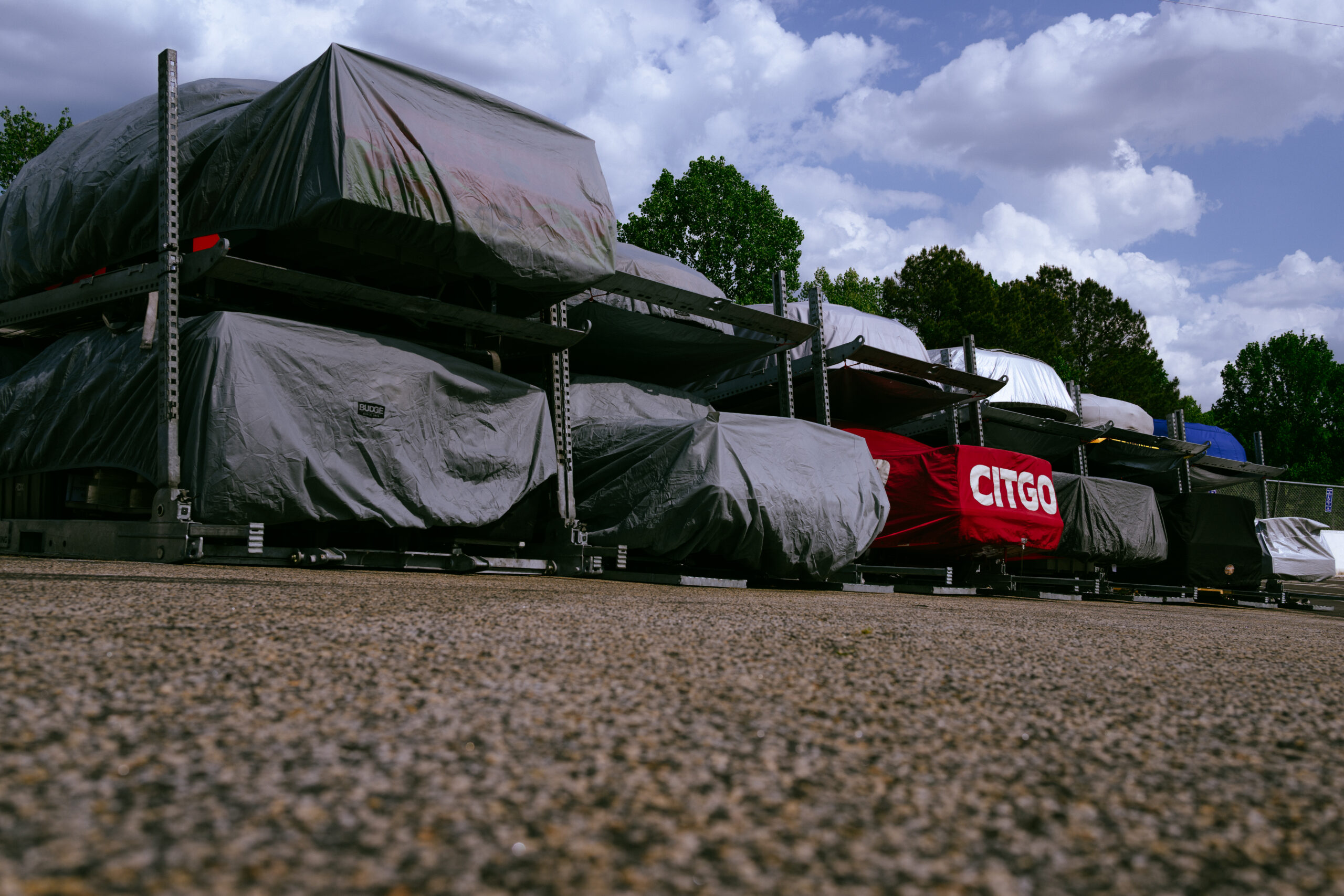
Photo · Hagerty Media
The Noise That Embarrassed Nobody
Picture it: the Circuit de la Sarthe, midsummer, the kind of heat that makes asphalt shimmer and the air taste like fuel. Now add a NASCAR stock car — wide, American, blunt as a fist — turning laps where prototypes usually float past like aeronautical daydreams. The sound alone is a statement. These machines don't whisper. They don't apologize. They arrive.
Fifty years ago, cars like these apparently made an impression at Le Mans. Not always a welcome one, if you read between the lines of the history. The tender-eared European racing crowd — and there is always a contingent of the tender-eared at Le Mans — had opinions. American motorsport, in that era, wore its loudness like a liability.
Now those same cars are going back.
Hagerty Media has reported that the Historic Sportscar Racing series — the HSR NASCAR Classic Presented by Goodyear — is traveling to France this summer as part of the Le Mans Classic Legend, timed to the Fourth of July weekend. The headline almost writes itself as a joke, and then you realize it isn't one.
What an Invitation Actually Means
There's a version of this story where you focus on the machinery. The specs, the provenance, the specific cars making the journey. That version is fine. It fills a page.
But the more interesting story is the invitation itself.
Le Mans Classic is not a charity event. The Circuit de la Sarthe doesn't open its gates to historical series out of nostalgia alone — the event exists at the intersection of passion and commerce, and the programming choices reflect what the organizers believe has cultural weight. So when an American historic stock car series earns a slot on the Fourth of July weekend — and the Hagerty piece notes that timing with a knowing "Appropriate, non?" — something real has shifted.
American motorsport spent decades in a complicated relationship with European legitimacy. NASCAR especially. It was too populist, too oval-centric, too loud in every sense of the word. The cars looked like cars your neighbor drove, which was either the whole appeal or the whole problem depending on who you asked. Le Mans was the cathedral of endurance racing, and stock cars were not exactly cathedral behavior.
What's changed isn't the cars. It's the cultural value of being exactly what you always were.
Heritage as a New Kind of Credibility
I keep thinking about what it means that this story is being told now, in this particular moment. We're living through a period of aggressive nostalgia — not the sentimental kind, but the monetized kind. Heritage has become an asset class. Authenticity, or the performance of it, is the thing everyone is trying to acquire and nobody can manufacture from scratch.
NASCAR stock cars from fifty years ago have something money can't fabricate: they actually happened. They were actually there. They actually deafened people who probably deserved it. That's not a recreation or a tribute or a brand extension. That's a lineage.
And here's what's interesting about the Hagerty piece staking out this territory: Hagerty has spent years making the case that the cars people actually loved — not the rarified collector cars, but the ones with history in their upholstery — deserve serious attention. This story fits that argument perfectly. NASCAR stock cars returning to Le Mans isn't niche enthusiasm. It's a thesis statement.
The writer's framing — the light touch on the Fourth of July timing, the sense that the whole thing is pleasingly absurd and also completely correct — suggests someone who understands that the joke and the point are the same thing. America sending its loudest cars to France on Independence Day weekend isn't accidental programming. It's a bit. It's also real.
Credibility Was Never the Problem
What I find myself sitting with, after reading this, is the question of who these events are actually for.
The racing is not competitive in the championship sense. The HSR series is historic. The cars are not fighting for a title that changes the shape of the sport. So the stakes, by conventional motorsport logic, are low.
But conventional motorsport logic has spent fifty years being wrong about what people actually want from cars and the culture around them. The crowds at Le Mans Classic are not there to see the future. They're there to feel something that the present tense of motorsport — the aerodynamic efficiency, the hybrid systems, the data-optimized silence of it all — has mostly optimized away.
A NASCAR stock car on the Circuit de la Sarthe in July is loud and wide and probably a little terrifying in the wrong hands. It will not disappear into the scenery. It will not be mistaken for something apologetic.
Fifty years ago, that was a problem. Apparently, it isn't anymore.
Keep reading cars.

800 Horsepower, One Ton of Doubt
Lamborghini built the most powerful SUV it's ever made. It's also slower than what it replaced.

£11,990 Draws a Line Under Every Excuse You Had Left
Dacia just made the cheapest new car in Britain electric — and that's not a footnote, it's a verdict.

Blanc Éternel Hides Its Speed Behind a Gas Cap
Bugatti built a 261-mph roadster and made sure you'd notice the porcelain first.
From the other desks.

Gold Leaf on a Lacquer Dial, and the Weight of What That Costs
Awake's Frosted Leaf Royal Blue asks a question Vietnamese craft has never quite had to answer at this price.

ESPN Named Him. Then Unnamed Him. Nobody's Explaining the Gap.
A retraction without a reckoning is just a deleted link.

Hide My Email Has Been Showing Your Email
Apple's privacy flagship has a hole in it. They've known for over a year.