The Car That Became a Myth Is Now a Museum Piece With a Price Tag
Wet Nellie is for sale, and what that means for automotive cinema history is more complicated than any auction estimate.
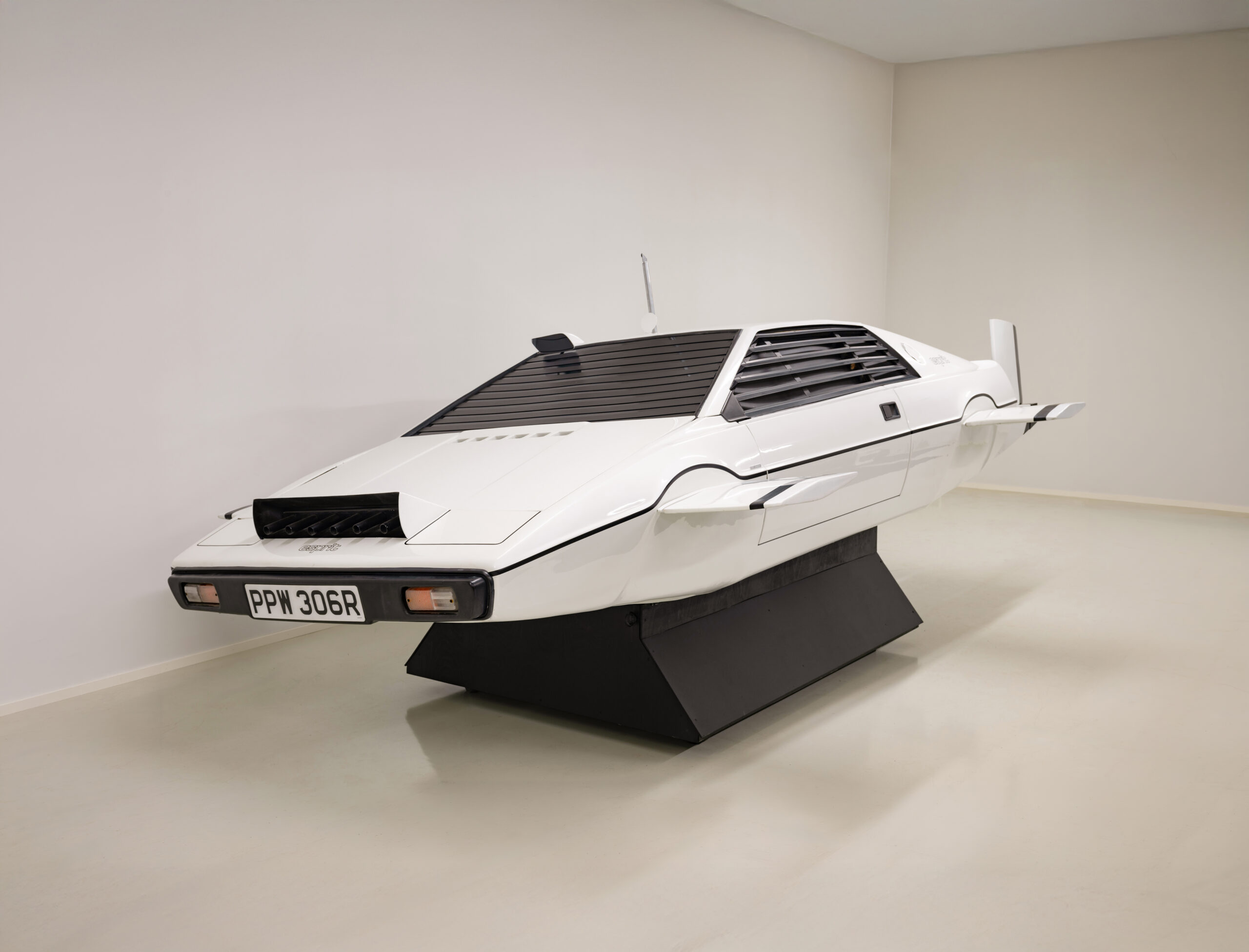
Photo · Hagerty Media
The Lotus Esprit was already a beautiful car. Then it drove off a pier in Sardinia and became something else entirely.
Wet Nellie — the submarine-converting Series 1 Esprit from The Spy Who Loved Me — is up for sale. Both Hagerty and Silodrome covered it this week, and both treated it the way you'd expect: collector's item, provenance intact, cinematic legend, buy now. That framing isn't wrong. It's just incomplete.
What neither piece really sits with is the specific alchemy that made this car mythological in the first place.
The Car Was Never Really a Car
The Esprit that submerged in 1977 didn't work as a submarine on its own terms. It was a prop. Multiple versions were built. The underwater sequences required purpose-built hardware that had nothing to do with Lotus's engineering department. The car that's for sale now is one of the full-scale surface props — visually correct, narratively complete, mechanically beside the point.
And yet it carries more cultural weight than almost any road-going Esprit ever will.
That's the thing about cinema objects. Their power isn't mechanical. It's associative. You're not buying what the car does. You're buying what the car is — which is a physical artifact of a specific moment when British industrial design and Cold War fantasy collided on a Sardinian coastline and produced something that lodged permanently in the collective imagination.
The Esprit was already Giugiaro at his most ruthless. Wedge geometry so committed it looked like it had been drawn with a ruler and a grievance. On screen, it looked less like a car than like a weapon someone had bothered to make beautiful. That was the point. Bond's cars were always aspirational objects, but the submarine Esprit was aspirational in a different register — it didn't just say fast or expensive, it said impossible made plausible.
What It Means That It's for Sale Now
The coverage this week focuses on the object. The rarity. The story. What it doesn't interrogate is the market logic underneath it.
Film prop collecting has quietly become one of the more aggressive corners of the broader memorabilia world. The objects that command real money now aren't costumes or scripts. They're vehicles — things with physical presence, things that photograph well, things that can sit in a climate-controlled space and still feel alive. Wet Nellie fits that profile perfectly. It's large enough to anchor a room. It's specific enough to be unambiguous. And it carries a story that doesn't require explanation to anyone born after 1965.
What you're really buying, if you buy this, is the right to own the most recognizable single frame in Lotus's entire history. Not the fastest Esprit. Not the most refined. The one everyone has seen.
There's something worth examining in that. The actual Lotus Esprit — as a driver's car, as a piece of engineering, as a thing that existed on roads — has a complicated legacy. Brilliant in concept, inconsistent in execution, perpetually under-resourced. The road car earned its reputation the hard way. The submarine prop earned its reputation in about four minutes of screen time.
And now the prop is the one with a six-figure auction estimate and a write-up in every automotive publication that bothers to cover culture.
I don't think that's a cynical outcome. I think it's an honest one. We've always known that mythology outpaces reality in the collector market. What's interesting about Wet Nellie is how cleanly it illustrates the principle. Nobody is pretending this is about driving dynamics.
It's about owning the moment the Esprit stopped being a car and started being a story.
The question is what you do with a story once you've bought it.
Keep reading cars.

800 Horsepower, One Ton of Doubt
Lamborghini built the most powerful SUV it's ever made. It's also slower than what it replaced.

£11,990 Draws a Line Under Every Excuse You Had Left
Dacia just made the cheapest new car in Britain electric — and that's not a footnote, it's a verdict.

Blanc Éternel Hides Its Speed Behind a Gas Cap
Bugatti built a 261-mph roadster and made sure you'd notice the porcelain first.
From the other desks.

Gold Leaf on a Lacquer Dial, and the Weight of What That Costs
Awake's Frosted Leaf Royal Blue asks a question Vietnamese craft has never quite had to answer at this price.

ESPN Named Him. Then Unnamed Him. Nobody's Explaining the Gap.
A retraction without a reckoning is just a deleted link.

Hide My Email Has Been Showing Your Email
Apple's privacy flagship has a hole in it. They've known for over a year.