Paris Keeps Building Bigger Waves. The Water Came From Somewhere Else.
SS27 had spectacle, subversion, and a tennis tournament — but the most interesting clothes weren't on any runway.
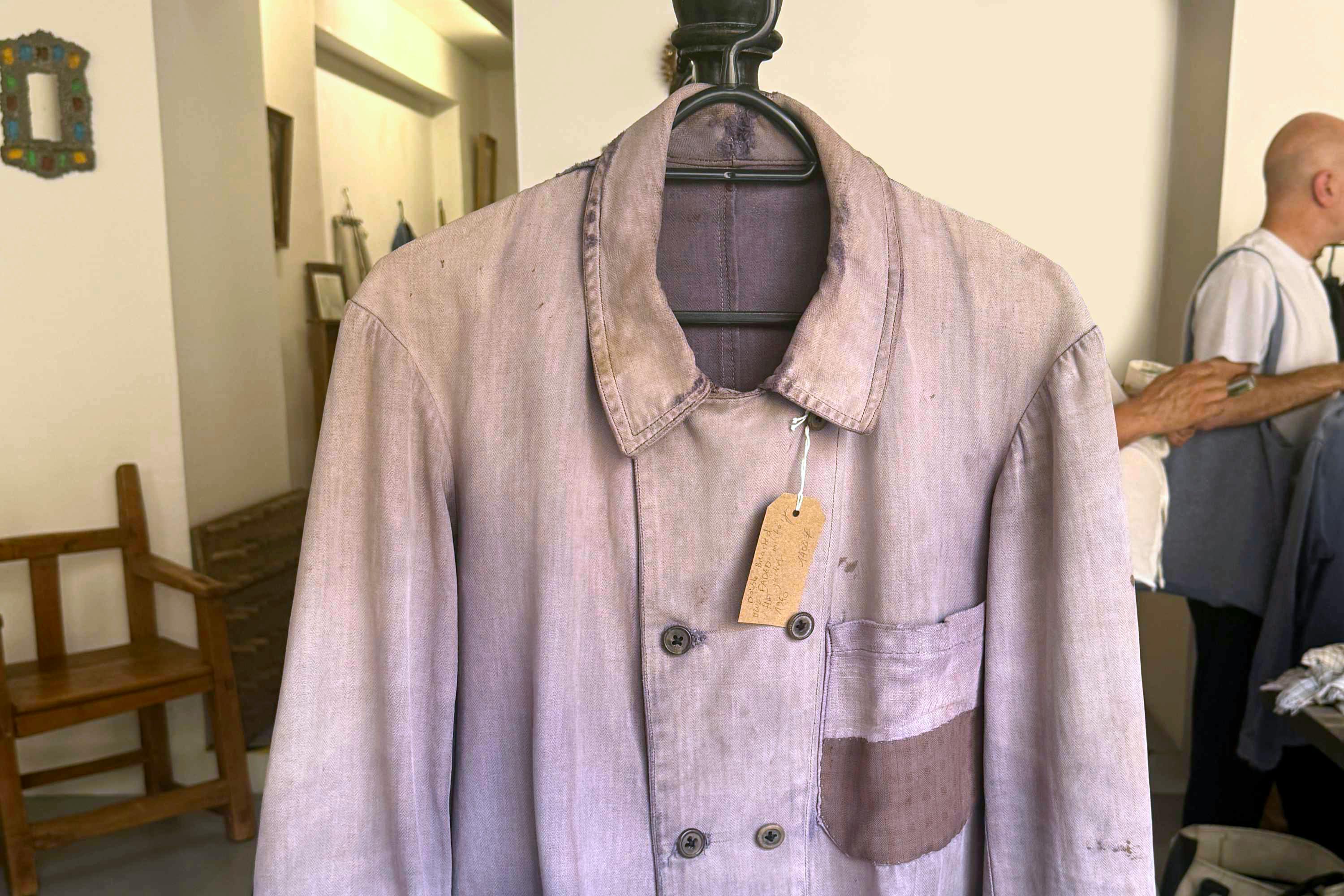
Photo · Highsnobiety
There's a version of Paris Fashion Week that arrives fully formed: the spiral staircase, the simulated tidal wave, the basement of the bougie Parisian house party. Jonathan Anderson staged Dior Summer 2027 at the Musée Nissim de Camondo, opening with a buzzing speaker and a model descending a staircase, phone in hand, before plugging into the aux cord. The club music started. Pharrell built a beach in the middle of Paris — LV-monogrammed wetsuits, Ugg-style boots, a massive manufactured ocean. Acne Studios sent men through a surreal office in exaggerated cowboy boots and fringed bags, with Jonny Johansson describing the whole exercise as a social experiment in individual expression. Sarah Burton shot her first Givenchy Men's campaign with Juergen Teller, casting Don McCullin, Don Letts, and Danny Fox — men who chose their own suits, their own embroidered outerwear, the whole thing deliberately unpolished, lo-fi, personal.
SS27 knew how to make an entrance. The question is what was actually waiting inside.
The Room Nobody Staged
Highsnobiety ran a conversation with vintage clothing curator Martin Lours that quietly upstaged most of what happened on the official schedule. His argument, roughly: the most compelling clothes at Paris Fashion Week came not from design houses but from the wardrobes of French peasants. Actual historical garments. Objects that were never intended for a runway, never conceived as statements, that have somehow outlasted every trend cycle they were never part of.
This is not a new observation dressed up as one. Fashion has circled vintage for decades. But Lours framing it against the backdrop of SS27 — a week that gave us a simulated ocean, a tennis tournament hosted by Highsnobiety at the Tennis Club de Paris on opening day, and enough spectacle to fill a cable package — sharpens the contrast into something harder to ignore.
When a curator of old French workwear is the most interesting voice in your coverage, the shows have a problem. Not a death sentence. A problem.
What the Shows Did Right
There were genuine ideas present. Our Legacy's SS27 collection, previewed exclusively through Highsnobiety, pulled from British subcultures without losing its Scandinavian restraint — an Anglophilic love letter that somehow didn't shout. Burton's Givenchy campaign resisted the instinct to perform newness; letting McCullin, Letts, and Fox wear what they actually wanted produced something that felt more like portraiture than advertising. Johansson at Acne was asking a real question about how people dress when institutions give them permission to be themselves and they still can't quite manage it.
These are not empty gestures. They're designers doing the thing design is supposed to do: noticing something true about how people live and responding to it with clothes.
But the scale of the surrounding apparatus — the themed venues, the celebrity-adjacent productions, the tennis tournaments staged to generate content alongside the collections — creates a gravitational pull toward event over object. The clothes become proof that the event happened.
The Older Garment Wins
What Lours is pointing at, and what several threads of this week's coverage circle without quite landing on, is that authenticity has stopped being a value fashion can claim through effort. You cannot manufacture the quality that comes from a garment that survived because someone loved it enough to keep it. You cannot stage that. The French peasant wardrobe wins not because it is better designed but because it is genuinely indifferent to whether you think so.
Fashion weeks were built to reveal what comes next. The more interesting question, after SS27, is whether the most vital things in fashion are still willing to be revealed there at all.
Keep reading fashion.
Pharrell Stopped Proving Himself and Made Something Worth Wearing
SS27 is the Louis Vuitton collection that finally feels like it belongs to no one but him.
Sapphire Hood, Jumping Hours, 150 Units — Amida Isn't Asking
The Digitrend OSII Black didn't soften its edges to get worn. It just started glowing.
Chalk Bags on a Runway. Someone Had to Do It.
Prada's Spring/Summer 2027 collection clipped climbing gear onto fashion's belt loop — and now the question isn't whether it works, but what happens to it next.
From the other desks.

Thirty Years of Progress, Captured in About Four Seconds of Footage
The IIHS put a 2026 Chevy Blazer into a 1996 model and the result isn't satisfying — it's haunting.

College Basketball Cashed Out. The Draft Just Ran the Receipt.
When the first 20 picks all played college ball, NIL stops being a controversy and starts being the pipeline.

Microsoft Said 'Breakthrough.' A Physicist Said 'Check Your Python.'
When a flagship quantum chip gets peer-reviewed into a corner, the real question isn't about qubits — it's about who we let define progress.