Skeleton Without the Screaming
Bell & Ross built an open-dial watch that trusts you to find the details yourself.
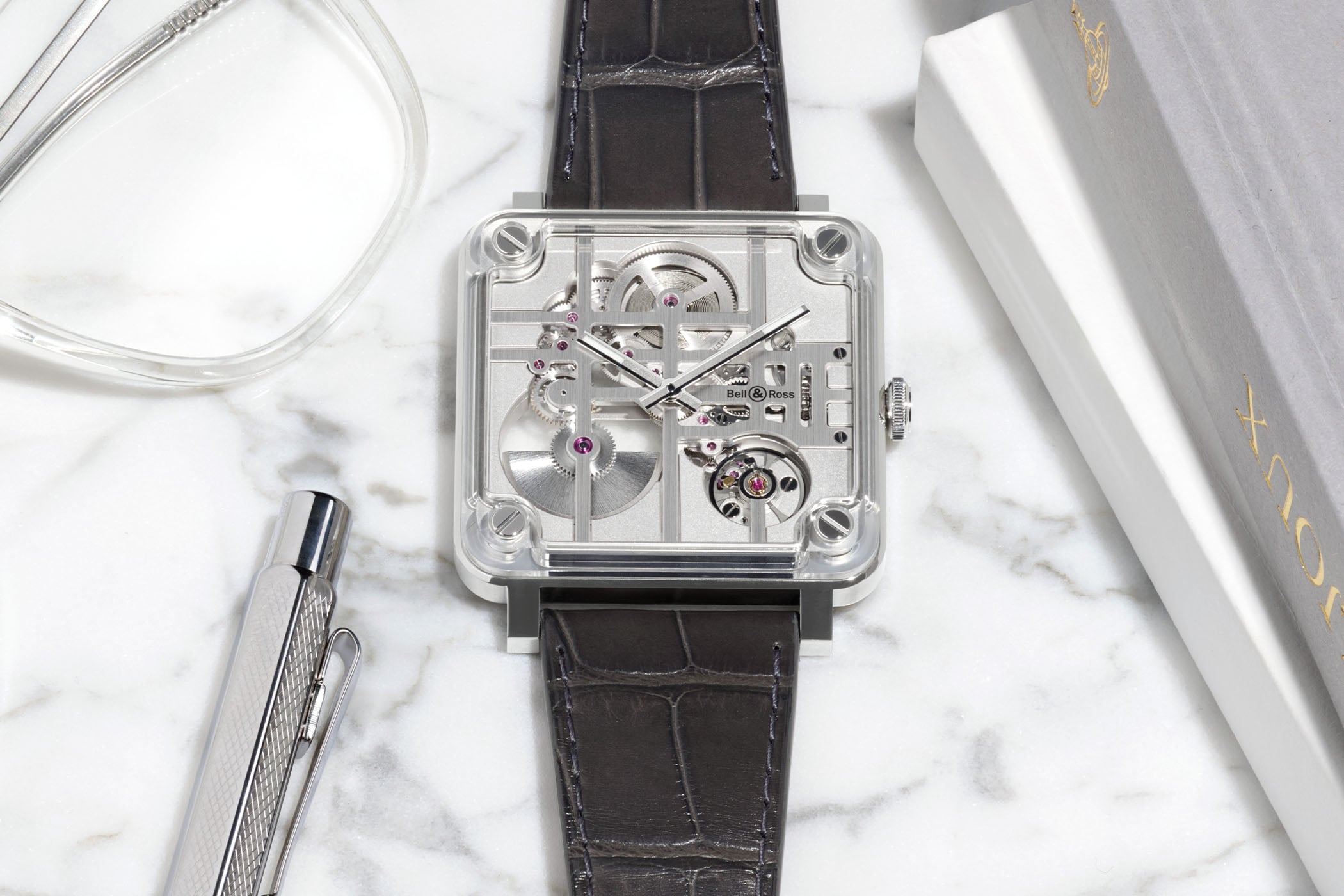
Photo · Monochrome Watches
Most skeleton watches are trying to impress you from across the room. The BR-X3 Micro-Rotor isn't doing that.
Bell & Ross stripped the dial back without turning it into a performance. The movement sits inside that circle-in-a-square case — a format the brand has owned since 2005 — and the micro-rotor tucks away like it's not looking for credit. That restraint is harder to pull off than it sounds. Most brands, given the opportunity to show off a rotor, make the rotor the show. Bell & Ross made it part of the sentence, not the headline.
The Architecture Argument
The tourbillon version from last year made the complication the whole point. This one makes the architecture the point. There's a difference, and it matters. One watch wants applause. The other just wants you to keep looking.
Skeleton execution usually goes one of two ways. Either the movement is so aggressively opened up it reads as chaos — bridges carved past the point of legibility, gilt edges competing for attention — or the whole thing is so symmetrical and deliberate it feels like a rendering. The BR-X3 lands somewhere most brands don't bother finding: structured without being sterile. You can read the gear train. You can follow the power path. That's not accidental. That's a decision someone made and held to under pressure to do more.
The micro-rotor itself is worth pausing on. A full-sized rotor would dominate the view, sit on top of everything, turn the movement into a backdrop for spinning metal. The micro-rotor steps aside. It earns its place in the composition rather than commanding it. The result is that you see the movement first and the rotor second — which is the correct order.
38mm and Honest About It
At 38mm, the proportions stay honest. Nothing is oversized to fill the space. This matters more than it used to. The industry spent a decade convincing everyone that 42mm was the floor for serious watchmaking, and now it's quietly walking that back. Bell & Ross didn't oversize the BR-X3 to signal ambition. The case is what the movement needs it to be.
The square-within-a-circle geometry does real work here too. It's not decoration. That shape creates natural zones — the dial is contained, the lugs are purposeful, the crown placement follows the logic of the form. When a case design has been around for nearly twenty years and still looks intentional rather than dated, that's not brand equity carrying it. That's good design.
Bell & Ross doesn't always get credit for being a serious watchmaker. The aviation aesthetic reads as costume to people who haven't looked closely — instrument dials and bold numerals that feel more like a mood board than a mechanical philosophy. That reading isn't entirely unfair. The brand has leaned into the aesthetic hard enough that the movement work sometimes gets buried under the concept.
The BR-X3 Micro-Rotor is what happens when the movement is the concept.
There's a version of watchmaking that performs depth. And there's a version that just goes deeper. The gap between those two things is usually invisible until you find a watch that closes it — and then you can't unsee it anywhere else.
Keep reading fashion.

Gold Leaf on a Lacquer Dial, and the Weight of What That Costs
Awake's Frosted Leaf Royal Blue asks a question Vietnamese craft has never quite had to answer at this price.

Kyle Smith Has a Job Title That Didn't Exist Before. That's the Whole Tell.
When the NFL hires a fashion editor, it's not about clothes — it's about who gets to decide what matters.

525 Victories, One Dial, and Cycling's Long Wait for a Wrist
Breitling's Eddy Merckx edition doesn't just reference a legend — it asks whether motorsport's younger sibling has finally earned its place in serious watch culture.
From the other desks.

800 Horsepower, One Ton of Doubt
Lamborghini built the most powerful SUV it's ever made. It's also slower than what it replaced.

ESPN Named Him. Then Unnamed Him. Nobody's Explaining the Gap.
A retraction without a reckoning is just a deleted link.

Hide My Email Has Been Showing Your Email
Apple's privacy flagship has a hole in it. They've known for over a year.