36 Years and Then You Leave
Mark Jones walked out of ESPN on his own terms. That's rarer than it sounds.
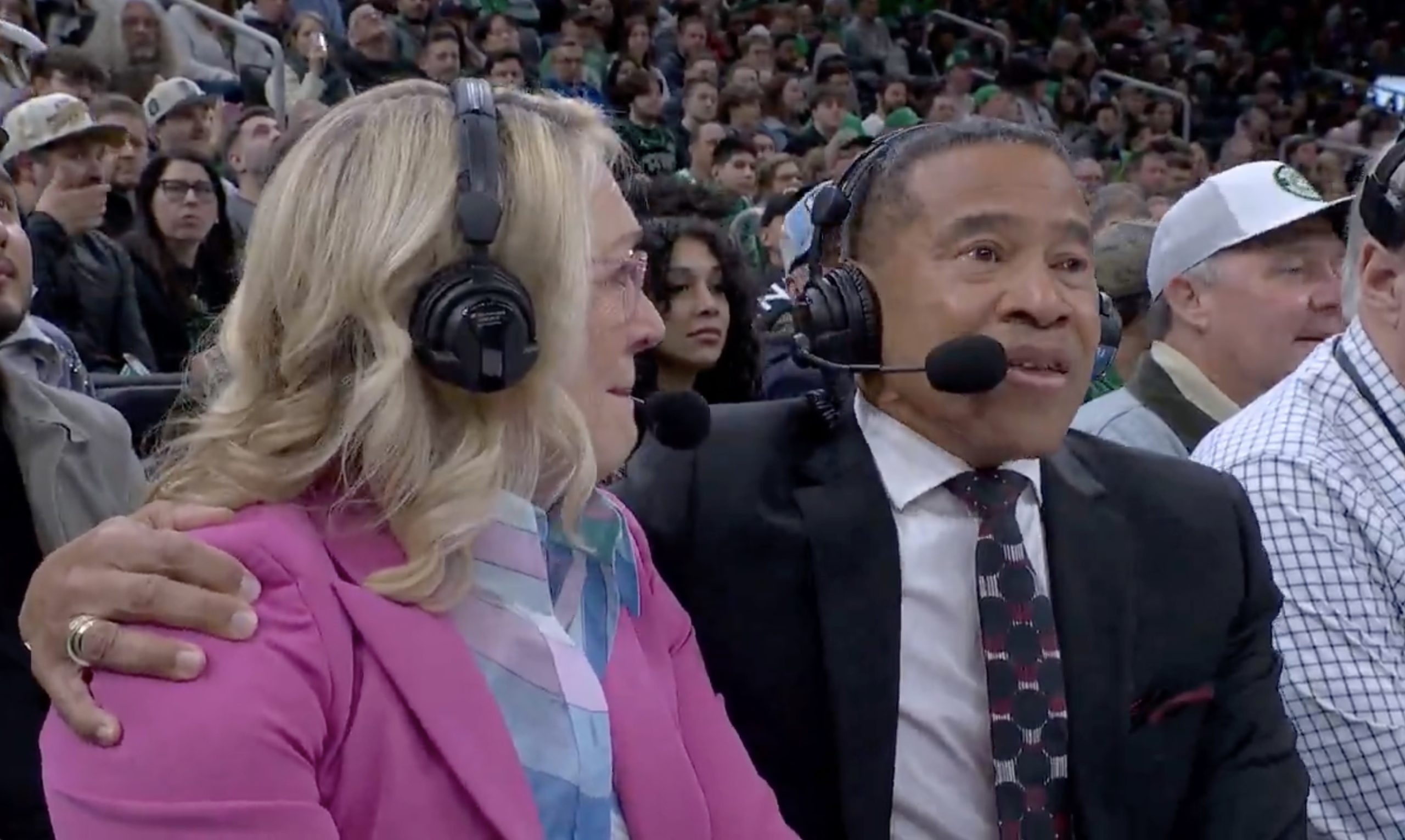
Photo · Awful Announcing
There's a version of this story that gets told as a retirement piece — warm, backward-looking, full of highlights. That's not what happened Sunday night.
Mark Jones signed off from ESPN after 36 years with the network, calling his final game alongside Doris Burke, an Orlando Magic–Boston Celtics matchup that probably didn't deserve the weight it was quietly carrying. He joined ESPN in 1990. He is leaving by choice. And he is not done broadcasting.
That last part is the thing worth sitting with.
The Difference Between Leaving and Being Done
Broadcasters don't usually leave institutions like ESPN — they get moved around, phased out, reassigned to lesser slots until the message becomes impossible to ignore. Or they stay until the end, collecting the tribute packages and the standing ovations and the careful language from executives who want to control the narrative. Jones didn't do either of those things. He left while he still had somewhere to go.
A writer at Awful Announcing framed this as an emotional moment — the sign-off, the pairing with Burke, the weight of three and a half decades compressed into a final broadcast. And it was emotional, by any fair reading. But what strikes me about the coverage isn't the sentiment. It's the structure underneath it. A man spent 36 years building something inside one institution, and then decided that wasn't the whole story.
That's a harder move than it looks. Institutional loyalty has a gravity to it. The longer you stay somewhere, the more your identity fuses with the place — the logo, the desk, the colleagues, the audience that associates your voice with a specific channel. Walking away from that, not because you have to but because you want something different, requires a kind of self-knowledge that most people in any industry never quite develop.
What the Moment Reveals
ESPN is not the monolith it once was. The media landscape around sports broadcasting has fractured enough that the idea of spending an entire career at a single network feels less like ambition and more like inertia. Jones came up in an era when ESPN was the destination, the thing you built toward. He's leaving in an era when it's one option among several, and apparently not the only one worth pursuing.
His stated intention — to continue as a play-by-play voice — matters here. This isn't a graceful exit. It's a pivot. The emotional sign-off is real, but it's not a closing ceremony. It's a transition, and the distinction says something about how broadcasters are starting to think about their careers: not as a single arc defined by one employer, but as something more portable, more self-directed.
There's a version of this that's just one man's decision, personal and specific to his circumstances. Maybe it is. But the fact that a writer at Awful Announcing thought it worth covering as a moment — not just a transaction — suggests it landed as something bigger. A signal, even if a quiet one.
Thirty-six years is a long time to belong somewhere. Choosing to stop belonging, on your own schedule, might be the most interesting thing about the whole story.
Keep reading sports.

ESPN Named Him. Then Unnamed Him. Nobody's Explaining the Gap.
A retraction without a reckoning is just a deleted link.

Three People Died Celebrating. FIFA Hasn't Said Their Names.
Mexico City buried three people after the World Cup crowds came through. At some point, the sport has to sit with that.

Sell the Stadium, Lose the Room
NFL franchises are rolling out the welcome mat for World Cup tourists — and the desperation is showing.
From the other desks.

800 Horsepower, One Ton of Doubt
Lamborghini built the most powerful SUV it's ever made. It's also slower than what it replaced.

Gold Leaf on a Lacquer Dial, and the Weight of What That Costs
Awake's Frosted Leaf Royal Blue asks a question Vietnamese craft has never quite had to answer at this price.

Hide My Email Has Been Showing Your Email
Apple's privacy flagship has a hole in it. They've known for over a year.