Anriel Howard Didn't Retire. She Auditioned.
When a WNBA player walks into a WWE tryout, that's not a career pivot — it's a referendum on what women's sports have become.
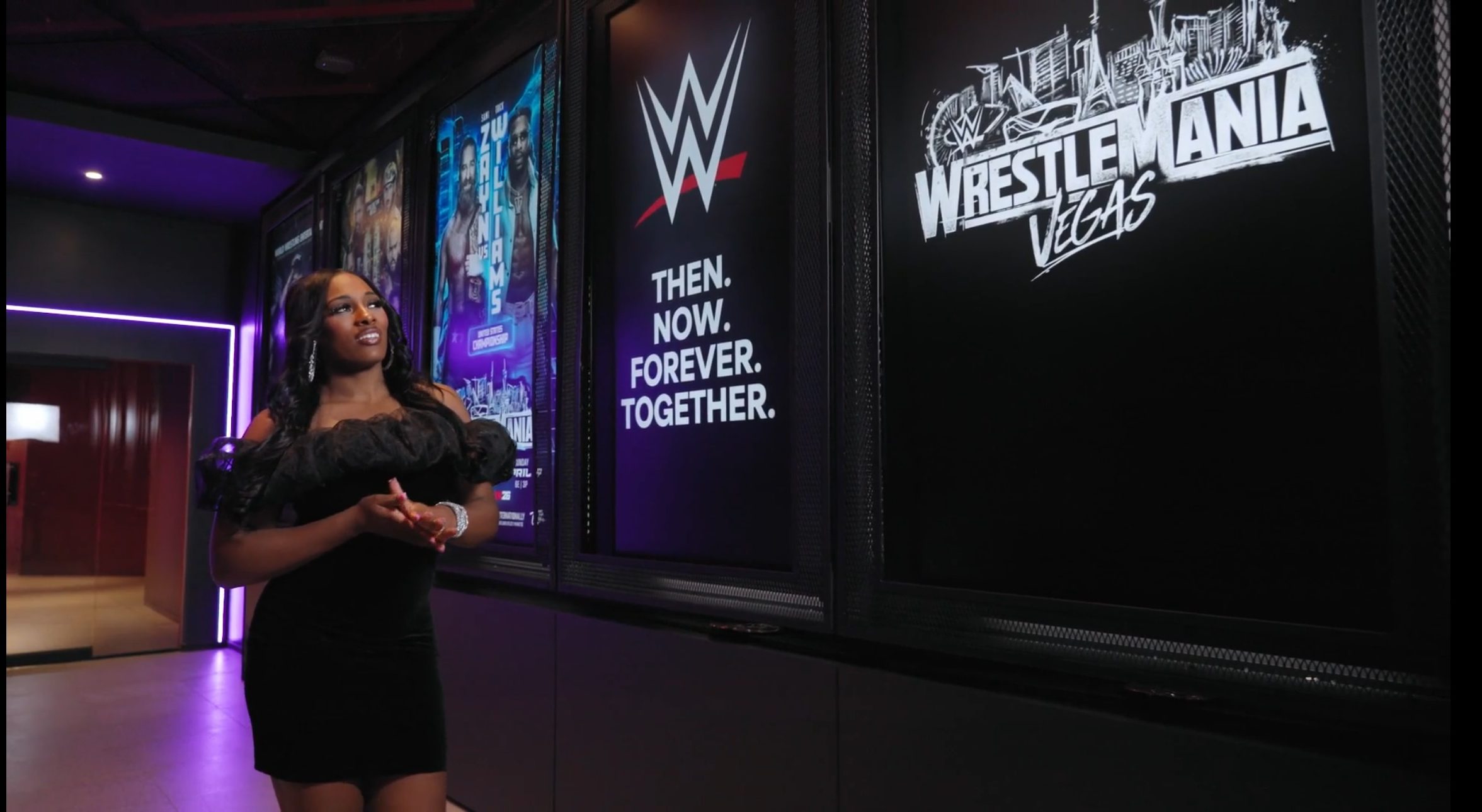
Photo · Andscape
Andscape has published a piece on Anriel Howard, and the most interesting thing about it isn't the story it tells. It's the story it assumes you'll accept.
Howard was waived by the Seattle Storm in 2019. She requested a WWE tryout. She is now Lash Legend, professional wrestler, apparently exactly where she's supposed to be. The Andscape piece frames this as arrival — a woman who doubted herself, found her footing, and landed. That framing is generous and probably accurate. But it also quietly contains something bigger, something the piece doesn't fully excavate: the fact that this path existed at all.
The Door That Wasn't There Before
For most of women's professional sports history, leaving one league meant leaving the conversation. The WNBA has always been the ceiling and the floor simultaneously — the highest level available, and the only level that registered culturally. Walk away from it, and you walked away from visibility. There was no lateral move. There was no adjacent stage.
That's changed. Not completely, not cleanly, but enough that a woman who plays basketball at an elite level can now look at professional wrestling and see a viable destination rather than a surrender. That's a structural shift, not a personal one. And Howard's trajectory is evidence of it whether she intended it to be or not.
What WWE offers that the WNBA couldn't — at least not for Howard in 2019 — is scale of a different kind. Not necessarily more respect, not necessarily more money, but more reach, more narrative, more room to become a character in the cultural sense. Professional wrestling is, at its core, a storytelling industry. For an athlete who could no longer find purchase in the league that trained her, it offered a genre switch rather than a retirement.
What Doubt Reveals
The Andscape piece notes that Howard wondered if she had made the right decision. That moment of doubt is worth sitting with, because it points to something real: the cost of being first, or near-first, on a path that hasn't been mapped. She wasn't following a well-worn route. She was improvising one.
The athletes who follow her — and there will be athletes who follow her — won't feel that same weight. They'll have a data point. They'll know it's possible to leave one professional sport and land with credibility in another, without the cultural narrative treating it as failure. Howard absorbed that uncertainty so someone else doesn't have to.
That's not a small thing. It's actually the whole mechanism by which opportunity expands in women's sports. Not policy, not advocacy alone — though those matter — but individual athletes making visible choices that redefine what the options look like.
The piece is right to call it arrival. But arrival implies a destination someone built for you. What Howard actually did was harder: she showed up to a place that wasn't expecting her and made it make sense.
The stage was always big enough. It just took someone willing to step onto it without a script.
Keep reading sports.

ESPN Named Him. Then Unnamed Him. Nobody's Explaining the Gap.
A retraction without a reckoning is just a deleted link.

Three People Died Celebrating. FIFA Hasn't Said Their Names.
Mexico City buried three people after the World Cup crowds came through. At some point, the sport has to sit with that.

Sell the Stadium, Lose the Room
NFL franchises are rolling out the welcome mat for World Cup tourists — and the desperation is showing.
From the other desks.

800 Horsepower, One Ton of Doubt
Lamborghini built the most powerful SUV it's ever made. It's also slower than what it replaced.

Gold Leaf on a Lacquer Dial, and the Weight of What That Costs
Awake's Frosted Leaf Royal Blue asks a question Vietnamese craft has never quite had to answer at this price.

Hide My Email Has Been Showing Your Email
Apple's privacy flagship has a hole in it. They've known for over a year.