Boston Magazine Crowned Him. Page Six Had Already Filed.
Mike Vrabel's credibility problem isn't about an affair — it's about who controls the story now.
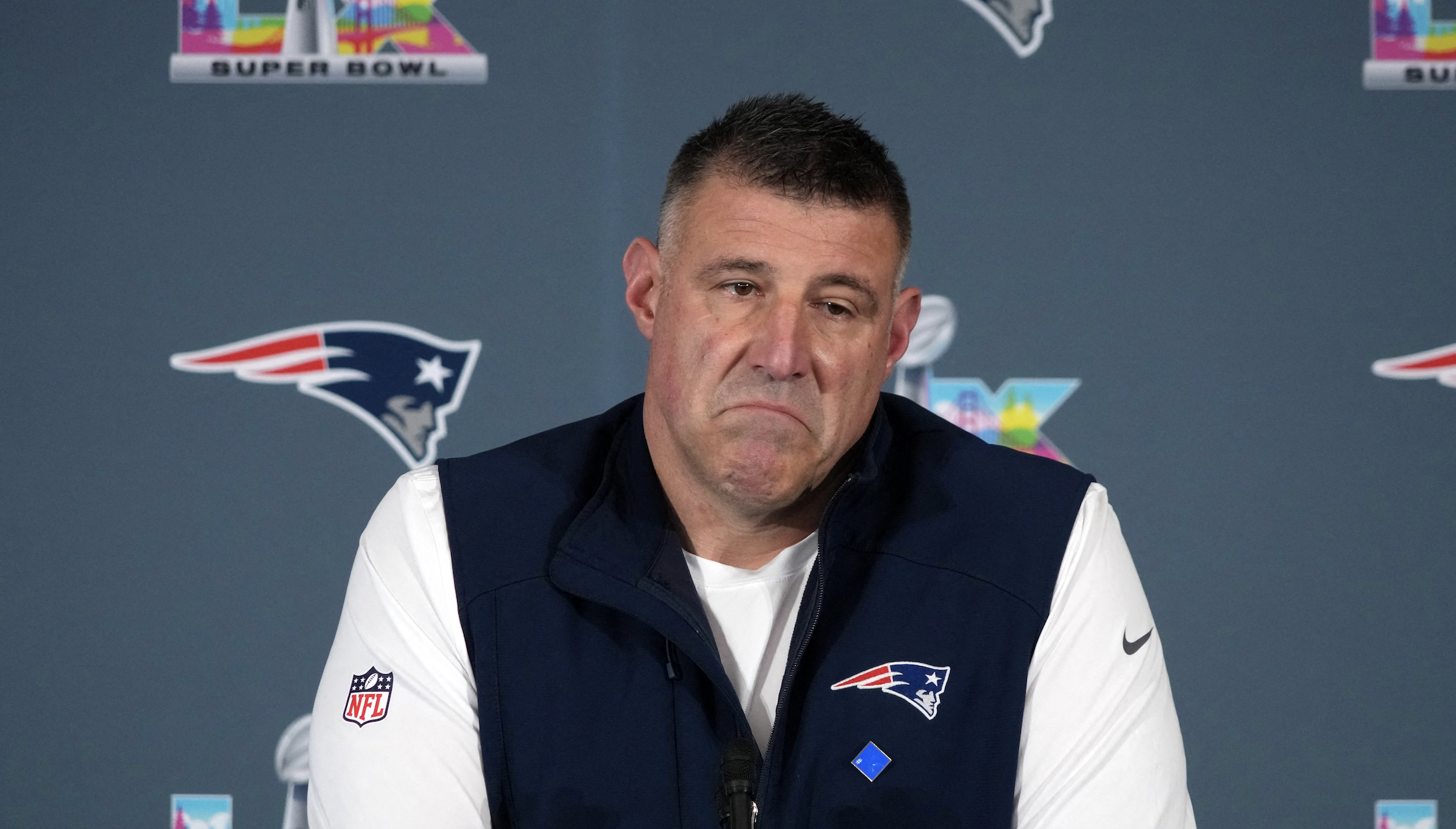
Photo · Awful Announcing
There's a particular kind of bad timing that isn't really bad timing at all. It's just reality arriving on a different schedule than the press cycle.
Mike Vrabel is on the cover of Boston Magazine as one of the city's most influential people. Somewhere, a photographer got the shot. A writer filed the profile. An editor approved the headline. The whole institutional machinery of civic celebration turned and pointed at a man being named head coach of the New England Patriots, and it said: this one.
And then Page Six published photos of Vrabel and NFL insider Dianna Russini at an adults-only hotel in Arizona.
The cover didn't change. The timing just made it absurd.
Two Machines, One Man
What's worth sitting with here isn't the affair itself — people's private lives are their own, and the moral ledger of any marriage belongs to the people inside it. What's worth sitting with is how fast the institutional version of a person can be made to look foolish by the tabloid version, and how neither one is really wrong.
Boston Magazine wasn't lying. Vrabel is influential. He's the head coach of the Patriots. That's real. The cover reflects a version of events that was true when they went to press and remains technically true now.
But credibility doesn't run on technicalities. It runs on perception, and perception moves faster than print.
Shannon Sharpe stepped into the conversation and asked, plainly, what code Vrabel actually broke. His argument, according to reporting from Awful Announcing, was essentially: this shouldn't affect his job. He's a football coach. His personal life is his personal life.
It's a defensible position. It's also beside the point.
The Real Exposure
The issue isn't whether Vrabel deserves to keep his job. He probably does. The issue is that Russini covers the NFL — which means the relationship sits inside a professional ecosystem where access, information, and influence all move in complicated directions. That's the part that doesn't resolve neatly. That's the part Shannon Sharpe's question doesn't quite reach.
Vrabel isn't being scrutinized because he had an affair. He's being scrutinized because the woman involved reports on the league he coaches in. Those are two different conversations, and the tabloid framing has collapsed them into one, which makes everyone look worse and nothing look clearer.
And now there's a magazine cover sitting on newsstands, and it can't outrun what's already been filed.
The cover was supposed to mark an arrival. Instead it marks something else — the gap between how institutions build a person up and how quickly one photograph can reframe everything they built. Boston Magazine didn't do anything wrong. Neither did the editors who approved the feature. They were just working from an older version of the story.
That's the thing about credibility in 2025. It doesn't erode gradually. It shifts in an afternoon, and the cover you approved three weeks ago becomes evidence of something you didn't intend to say.
Vrabel will probably coach football. The Patriots will probably win some games and lose some others. The Russini situation will find its own resolution, whatever that looks like.
But that magazine cover is going to follow him for a while — not because it's wrong, but because being called influential right now asks a question nobody in that building wanted to ask.
Keep reading sports.

ESPN Named Him. Then Unnamed Him. Nobody's Explaining the Gap.
A retraction without a reckoning is just a deleted link.

Three People Died Celebrating. FIFA Hasn't Said Their Names.
Mexico City buried three people after the World Cup crowds came through. At some point, the sport has to sit with that.

Sell the Stadium, Lose the Room
NFL franchises are rolling out the welcome mat for World Cup tourists — and the desperation is showing.
From the other desks.

800 Horsepower, One Ton of Doubt
Lamborghini built the most powerful SUV it's ever made. It's also slower than what it replaced.

Gold Leaf on a Lacquer Dial, and the Weight of What That Costs
Awake's Frosted Leaf Royal Blue asks a question Vietnamese craft has never quite had to answer at this price.

Hide My Email Has Been Showing Your Email
Apple's privacy flagship has a hole in it. They've known for over a year.