Every Commissioner Is Saying the Same Thing. Listen Carefully.
When the people who set the prices start complaining about the prices, the next deal is already written.
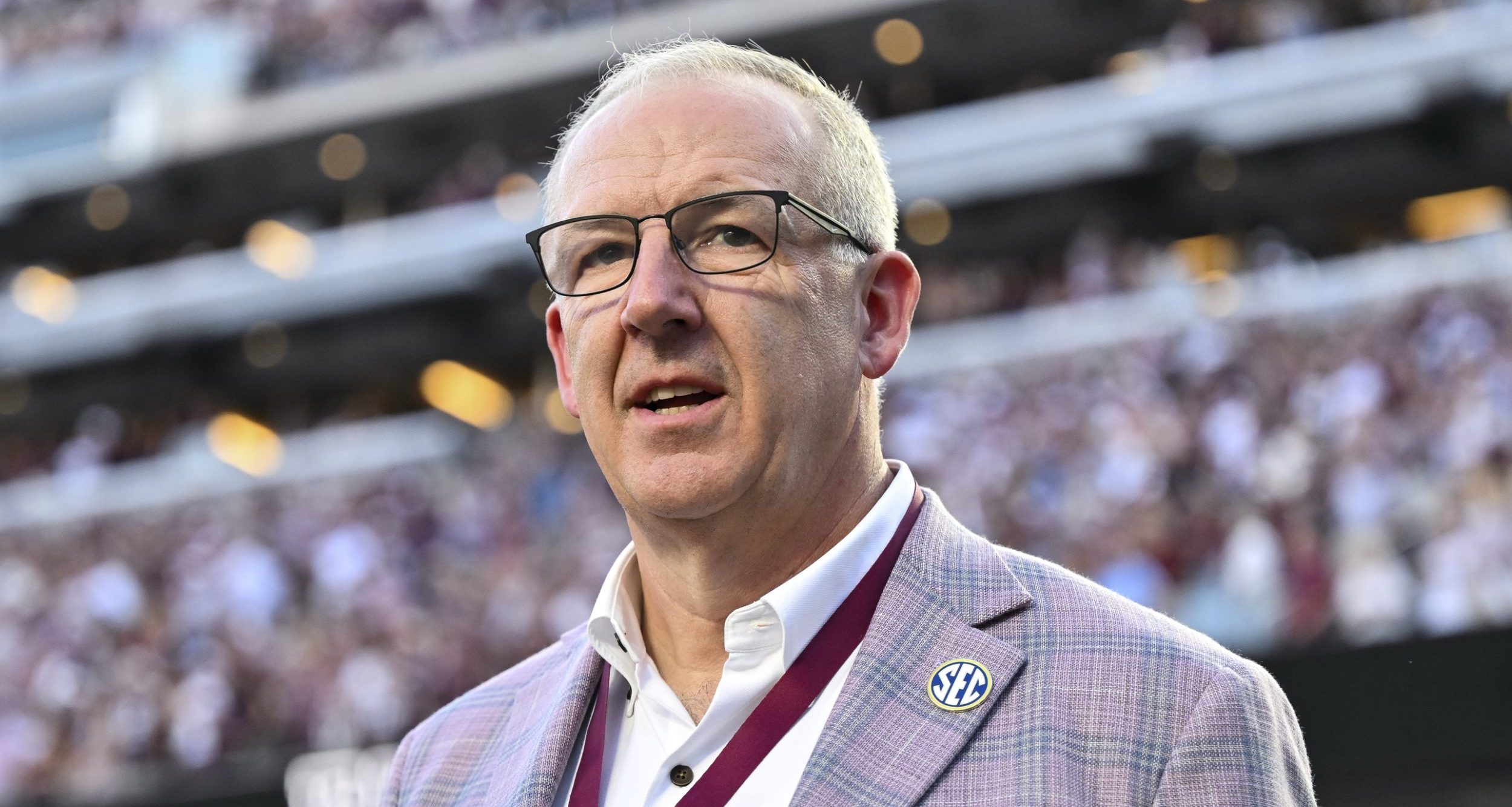
Photo · Awful Announcing
There's a version of this story where everyone is telling the truth at the same time, and somehow that makes it stranger.
Greg Sankey, commissioner of the SEC, stood in front of reporters at the conference's spring meetings this week and said, plainly, that the SEC's current media deal with ESPN is undervalued. Not hedged. Not diplomatic. Undervalued. Rob Manfred appeared on a Wednesday night special edition of The Pat McAfee Show on ESPN — an appearance that included multiple commissioners from professional leagues — and talked about MLB expansion in terms of a decade-long outlook, framing new cities as new opportunity, which in this context means new rights fees, new markets, new leverage. And beneath all of it, a Sportico report placing in-game TV ad spend on a trajectory to approach $25 billion by 2027, driven in significant part by the NFL.
Read those three things together and something clicks into focus.
The Scarcity Was Always the Product
For years, the implicit argument behind sports media rights was that live sports were special — not because anyone said so out loud, but because the prices kept rising and nobody stopped writing the checks. The scarcity was real, but it was also performed. Networks needed the inventory. Leagues needed the relationships. Everyone agreed, quietly, to pretend the number on the contract was the number.
That agreement is dissolving. When Sankey says the SEC's deal is below market, he's not complaining — he's negotiating. Publicly. In the direction of whoever holds the next contract. When Manfred talks about expansion in 10-year segments and mentions that it opens up a whole lot of opportunities, he's not musing. He's pricing.
And the Sportico data is what makes the public posturing rational rather than reckless: the advertising money is still moving toward live sports, and accelerating. As the broader TV landscape splinters across platforms and on-demand libraries, the thing that commands a room — the thing everyone watches at the same time, without pausing — is increasingly rare. Rare enough that $25 billion in projected ad spend by 2027 doesn't sound like an overstatement. It sounds like a floor.
What Simultaneous Viewing Is Actually Worth
Here's the thing nobody in these conversations says directly: the value isn't really the sport. It's the simultaneity. It's the fact that millions of people are in the same moment, unable to skip, unwilling to look away, and advertisers know exactly where they are. That experience — shared, live, uncontrolled — is almost extinct everywhere else in media. Sports leagues didn't create that condition intentionally. They just happen to own the last reliable version of it.
Which is why every commissioner publicly calling their own deal undervalued isn't a scandal or a miscalculation. It's a market signal. They're telling the next bidder — whether that's a legacy network, a streaming platform, or some combination that doesn't exist yet — that the previous number was a courtesy. The next one will be the real one.
Manfred framing expansion through a 10-year lens is particularly sharp. New teams mean new markets, but more than that, new rights to sell. Every expansion franchise is a content asset before it's a baseball team. Sankey's complaint about the ESPN deal carries the same logic — the SEC didn't suddenly get better at football. The market for attention got smaller, and the SEC still has some.
These aren't grievances. They're announcements.
The leagues have figured out that the only thing genuinely worth money right now is the thing you cannot watch later and still feel like you were there — and they're done undercharging for it.
Keep reading sports.

ESPN Named Him. Then Unnamed Him. Nobody's Explaining the Gap.
A retraction without a reckoning is just a deleted link.

Three People Died Celebrating. FIFA Hasn't Said Their Names.
Mexico City buried three people after the World Cup crowds came through. At some point, the sport has to sit with that.

Sell the Stadium, Lose the Room
NFL franchises are rolling out the welcome mat for World Cup tourists — and the desperation is showing.
From the other desks.

800 Horsepower, One Ton of Doubt
Lamborghini built the most powerful SUV it's ever made. It's also slower than what it replaced.

Gold Leaf on a Lacquer Dial, and the Weight of What That Costs
Awake's Frosted Leaf Royal Blue asks a question Vietnamese craft has never quite had to answer at this price.

Hide My Email Has Been Showing Your Email
Apple's privacy flagship has a hole in it. They've known for over a year.