The Knockout Stage Has a Different Kind of Pressure This Year
Three rape cases, an ongoing tournament, and a sport that has never been good at deciding which story is the real one.
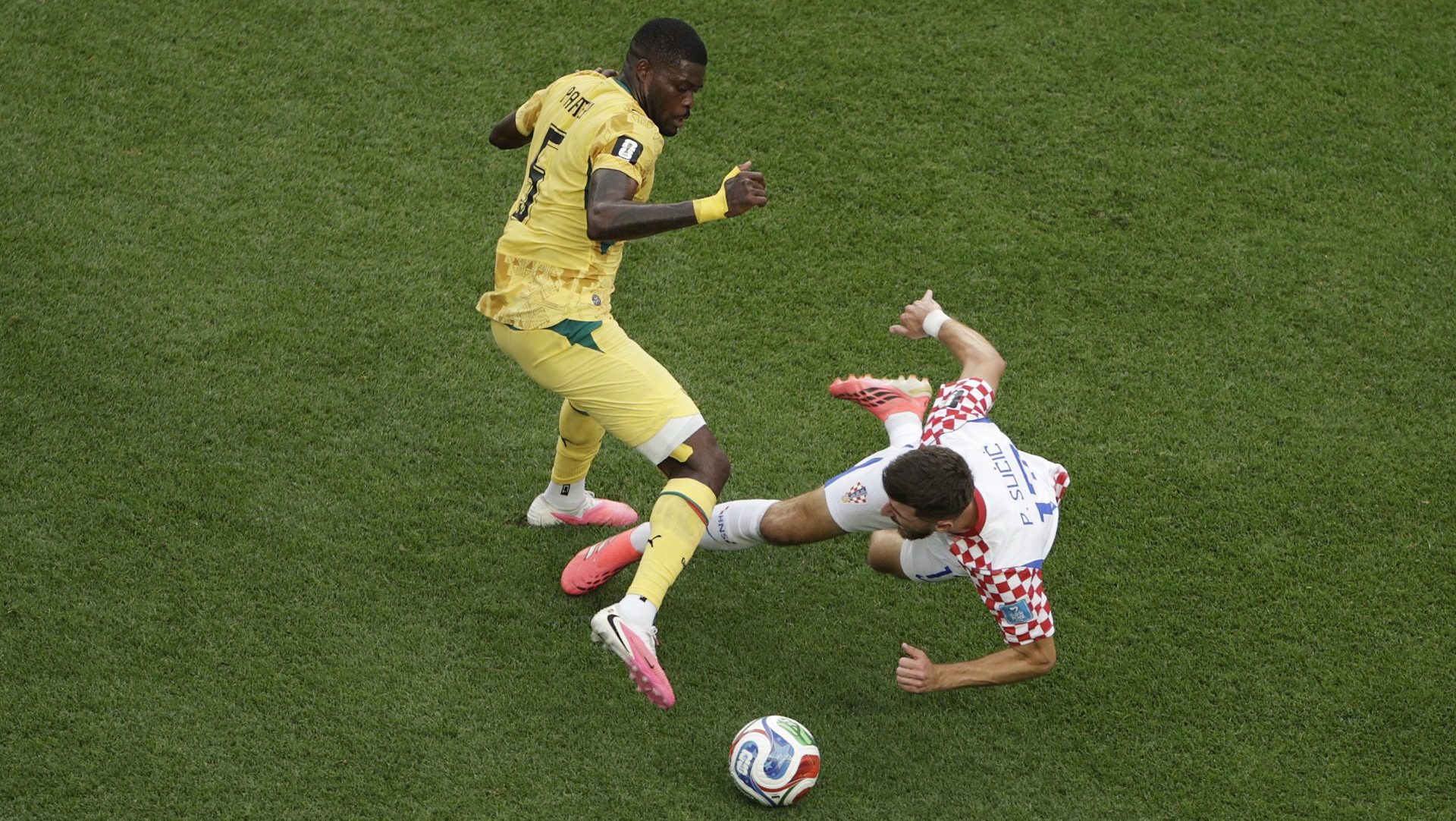
Photo · Front Office Sports
Someone at Front Office Sports decided to say it plainly: three players with ongoing rape cases are active in the World Cup knockout stage. Not framed as rumor. Not buried in a sidebar. Said directly, at the moment when the tournament's stakes are highest and its cameras are most unblinking.
That choice — to publish it now, at this stage, in this language — is worth sitting with.
The Timing Is the Argument
There is a version of this story that gets written after the final whistle, after the trophy is lifted, after the confetti is swept. Sports media has a long tradition of deferring the hard accounting. Wait until the season ends. Wait until charges are filed. Wait until something is proven. And by then, the moment has passed, the audience has moved on, and the institutional discomfort gets to dissolve quietly into the archive.
Publishing during the knockout stage refuses that deferral. It places the cases and the spectacle in the same frame, at the same time, and asks the reader to hold both simultaneously. That is not comfortable. It is not supposed to be.
The piece at Front Office Sports doesn't editorialize heavily. It states the situation. Multiple players. Ongoing cases. Others accused. The restraint is almost its own argument — here are the facts, here is the stage, you decide what that means.
But the decision to run it now means the publication has already decided something: that the timing matters. That the World Cup's biggest moment is precisely when this should be visible, not after.
What the Sport Has Always Counted On
Football — and major tournament football especially — has historically been extraordinarily good at absorbing bad news. The scale of the spectacle functions like atmospheric pressure. Scandals that would collapse smaller institutions get processed through the machinery of 90-minute narratives and compressed into footnotes. The game continues. The crowd roars. The story moves forward.
This works until it doesn't. And the question the Front Office Sports piece implicitly raises is whether we're approaching a threshold — not because the cases are unique to this tournament, but because the combination of institutional visibility, ongoing legal proceedings, and an audience that increasingly refuses to compartmentalize is creating a different kind of scrutiny.
Three cases isn't a coincidence to be managed. It's a pattern to be addressed. And the knockout stage, with its elimination logic and its global viewership, is a strange and clarifying backdrop for that reckoning.
The sport has survived worse. It has also never really been asked to survive while the cameras were rolling on both stories simultaneously.
The Credibility Exposure
Here's the tension that the piece surfaces without quite naming it: tournaments need moral authority to function as celebrations. They need the audience to believe, at least provisionally, that the competition is the thing — that the stakes are the athletic stakes, that the winner will have won something worth winning.
When three players with active rape cases are moving through the bracket, that provisional belief becomes harder to maintain. Not impossible. But harder. The audience is being asked to cheer for something that is also, simultaneously, a case study in institutional tolerance.
The governing bodies will not pause. The matches will be played. The goals will be scored. None of that is in question.
What's in question is whether the applause means the same thing it used to — and whether the sport's administrators have thought carefully about the cost of finding out.
Keep reading sports.

ESPN Named Him. Then Unnamed Him. Nobody's Explaining the Gap.
A retraction without a reckoning is just a deleted link.

Three People Died Celebrating. FIFA Hasn't Said Their Names.
Mexico City buried three people after the World Cup crowds came through. At some point, the sport has to sit with that.

Sell the Stadium, Lose the Room
NFL franchises are rolling out the welcome mat for World Cup tourists — and the desperation is showing.
From the other desks.

800 Horsepower, One Ton of Doubt
Lamborghini built the most powerful SUV it's ever made. It's also slower than what it replaced.

Gold Leaf on a Lacquer Dial, and the Weight of What That Costs
Awake's Frosted Leaf Royal Blue asks a question Vietnamese craft has never quite had to answer at this price.

Hide My Email Has Been Showing Your Email
Apple's privacy flagship has a hole in it. They've known for over a year.