The Whistle Already Decided Before Towns Touched Anyone
A Defector writer just named the thing Knicks fans have been arguing about all season — and they're right, but only halfway.
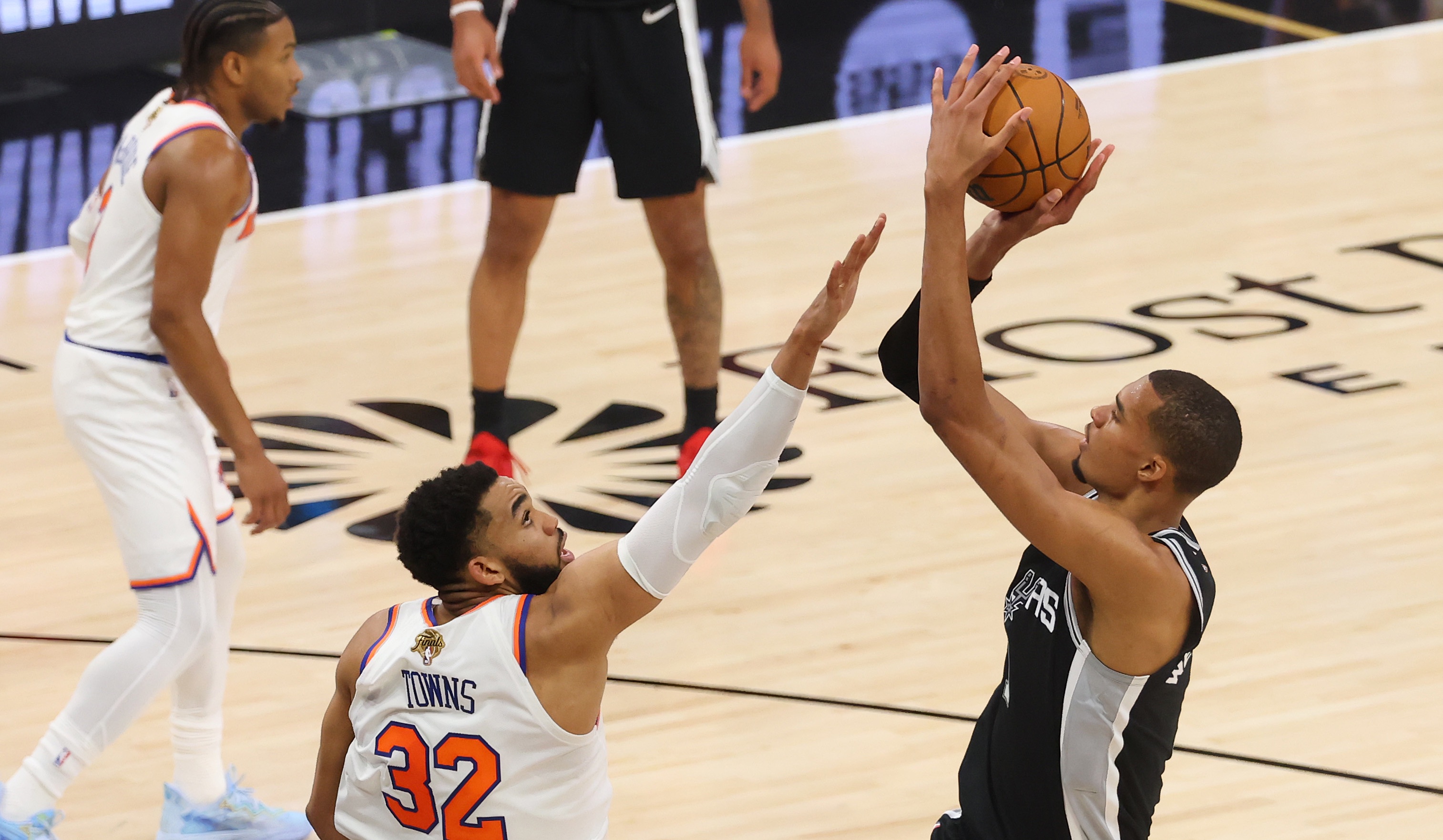
Photo · Defector
There's a version of the Karl-Anthony Towns foul problem that's entirely on Karl-Anthony Towns. And then there's the version that says the whistle has already made up its mind before the play develops, before contact is made, before intent can even be read. A writer at Defector just tried to hold both versions at once — and the tension between them is more interesting than either argument alone.
The numbers are not subtle. According to the piece, Towns led the entire league with 65 offensive fouls during the regular season, while averaging 3.4 fouls per game overall. That's not a guy who occasionally gets in trouble. That's a guy the rulebook seems to have a personal grudge against.
The System Doesn't Give Him the Benefit
What the Defector writer is actually describing — while being careful not to fully commit to it — is officiating bias as a structural condition. Not a conspiracy, not incompetence, but a kind of institutional assumption that follows a player from arena to arena. The idea that officials assume the worst intentions on Towns' part before the play resolves is a serious charge. It means the call isn't a response to what happened. It's a confirmation of what was expected.
That's a different problem than a player with bad footwork or loose elbows. You can fix footwork. You can't fix a reputation that's already been absorbed into the officiating subconscious.
And yet the writer — a self-described Knicks fan, which matters here — doesn't let Towns completely off the hook. The image they reach for is memorable: limbs that appear to move with the decentralized nervous system of an octopus, swinging into opposing players in ways that are technically, undeniably illegal. It's a generous framing and a damning one simultaneously. You almost feel sympathy and frustration in the same breath.
What's Actually Being Said
Here's what I keep returning to: this piece exists at the intersection of two anxieties that NBA fans don't usually sit with at the same time. The first is whether a player is genuinely a liability — someone whose physical habits cost his team real possessions, real games, real playoff position. The second is whether the system judging him is calibrated fairly in the first place.
Most coverage picks one lane. The Defector piece doesn't, and that's why it's worth paying attention to. Because if you accept both things — that Towns sometimes earns his fouls and that officials give him less leeway than comparable superstars — then the question of accountability gets genuinely complicated. Who fixes what? Does Towns change his game to accommodate a biased standard, essentially rewarding the bias? Or does he play his game and keep paying the tax?
There's no clean resolution offered. The piece lands on Towns being calm — composed, even — which in context reads less like a verdict and more like a provocation. Calmness against a system that already has your number isn't a solution. It's a stance.
The real story here isn't whether Towns fouled out. It's whether calm is enough when the call is already coming.
Keep reading sports.

ESPN Named Him. Then Unnamed Him. Nobody's Explaining the Gap.
A retraction without a reckoning is just a deleted link.

Three People Died Celebrating. FIFA Hasn't Said Their Names.
Mexico City buried three people after the World Cup crowds came through. At some point, the sport has to sit with that.

Sell the Stadium, Lose the Room
NFL franchises are rolling out the welcome mat for World Cup tourists — and the desperation is showing.
From the other desks.

800 Horsepower, One Ton of Doubt
Lamborghini built the most powerful SUV it's ever made. It's also slower than what it replaced.

Gold Leaf on a Lacquer Dial, and the Weight of What That Costs
Awake's Frosted Leaf Royal Blue asks a question Vietnamese craft has never quite had to answer at this price.

Hide My Email Has Been Showing Your Email
Apple's privacy flagship has a hole in it. They've known for over a year.