Thirteen Years of Presidents' Trophy Losers Can't All Be Unlucky
A writer at Defector called the Avalanche sweep a vulgar disgrace. The real disgrace is that we're still surprised.
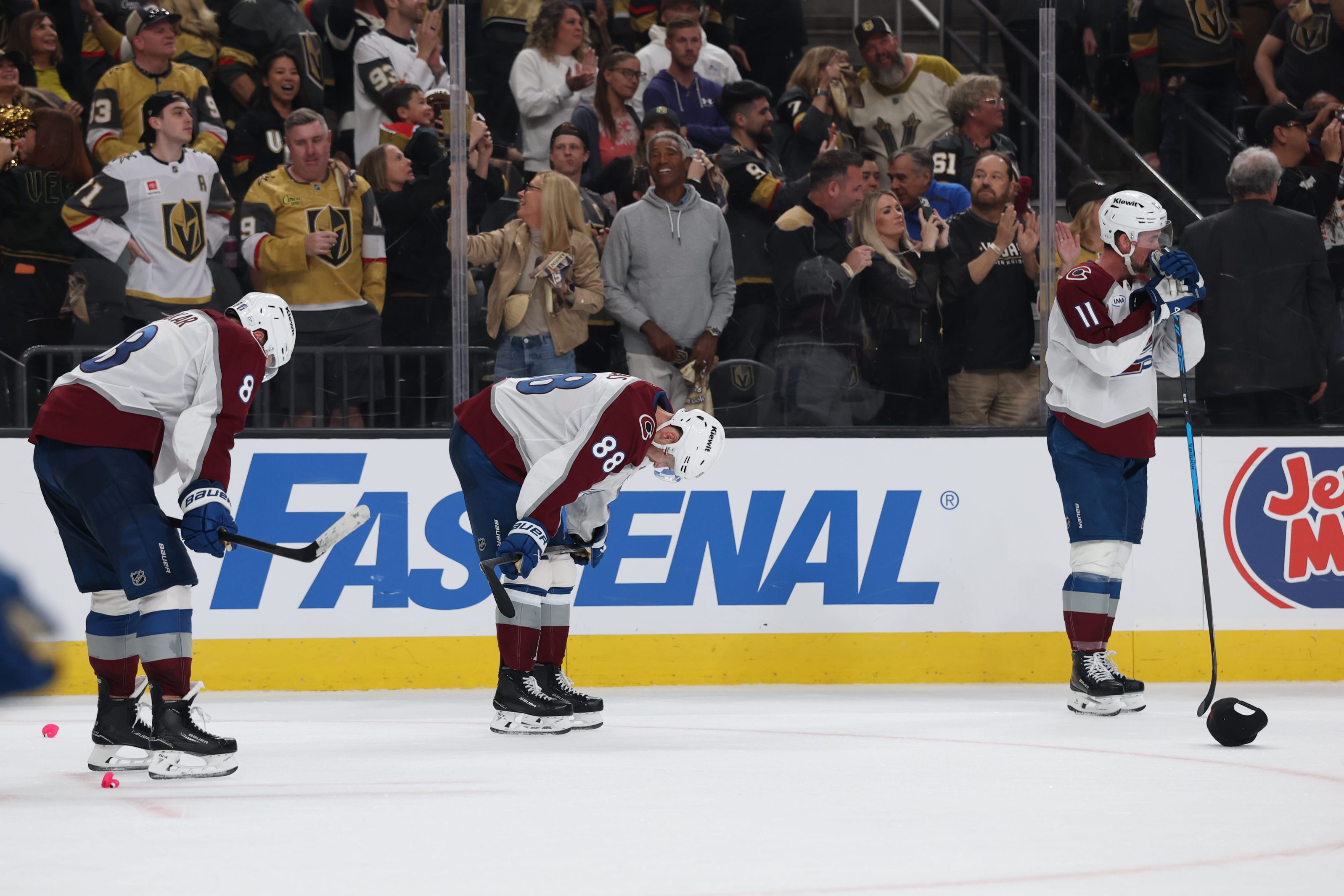
Photo · Defector
A writer at Defector opened with the scoreboard and the caveats simultaneously — yes, thirteen consecutive Presidents' Trophy winners eliminated before the Cup Final, yes Cale Makar was too injured to play the first two games, yes Nathan MacKinnon wasn't close to healthy by the end, yes Carter Hart was doing something strange and difficult in net for Vegas. All of that is true. None of it, the writer argues, changes the verdict: this was embarrassing. Total humiliation. A sweep.
The caveats are doing a lot of work in that framing. They have to. Because if you strip them away, what you're left with is a pattern so consistent it stopped being a coincidence around year seven.
The Regular Season Is a Different Sport
Thirteen years. Not a rough patch. Not a tough draw. Thirteen Presidents' Trophy winners, thirteen early exits. At some point the hockey calendar splits into two completely separate competitions that happen to share a logo — one runs from October to April and rewards depth, consistency, and the ability to grind through eighty-two games without losing your mind; the other runs from April onward and rewards something else entirely, something closer to controlled desperation and goaltending that borders on theological.
The Avalanche didn't just lose. They got swept. By a team playing in front of a goaltender, Hart, who the source describes plainly as hot — the playoff hockey term for a man currently operating outside the normal boundaries of what a human being should be able to do with a stick and a glove. That's not an excuse. Hot goaltending is a real phenomenon, and it is also completely outside the control of the Presidents' Trophy winner, which is exactly the problem.
The best team in the league during the regular season has no reliable answer for a goaltender who decides, for two weeks, to be unreachable. No amount of regular-season excellence builds immunity to that. You can win sixty games and still walk into a series where the other team's goalie has simply decided not to let anything in, and there is no strategic response that doesn't ultimately require pucks going past him.
What the Embarrassment Reveals
The writer at Defector is angry, and the anger is honest. You can feel the specific frustration of someone who watched a team they expected to be fun get removed from the Stanley Cup Final picture in four games, taking with them whatever narrative the Final might have carried. That's a real loss — not just for Colorado, but for the shape of the whole postseason.
But the embarrassment framing is also, quietly, a concession. You only call something embarrassing if you believed it shouldn't have happened. And after thirteen years, belief that the Presidents' Trophy winner should survive into June is the thing that needs examining.
Makar's injury matters. MacKinnon's health matters. These aren't deflections — they're the exact kind of variables that make a best-of-seven series a genuinely chaotic instrument for determining who's best. The regular season smooths those variables out over eighty-two games. The playoffs amplify them. One injury to one irreplaceable player in game one of a series can restructure everything that follows.
That's not a flaw in the playoffs. That's the playoffs. That's what makes them worth watching.
What's worth sitting with, after the Avalanche go home and the Cup Final goes on without them, is that we keep framing these exits as failures of the teams rather than features of the format. Colorado was the best team in the league for eight months. Then they played a different sport for two weeks and lost. Thirteen Presidents' Trophy winners in a row have had some version of this story.
At some point, the trophy is the warning.
Keep reading sports.

ESPN Named Him. Then Unnamed Him. Nobody's Explaining the Gap.
A retraction without a reckoning is just a deleted link.

Three People Died Celebrating. FIFA Hasn't Said Their Names.
Mexico City buried three people after the World Cup crowds came through. At some point, the sport has to sit with that.

Sell the Stadium, Lose the Room
NFL franchises are rolling out the welcome mat for World Cup tourists — and the desperation is showing.
From the other desks.

800 Horsepower, One Ton of Doubt
Lamborghini built the most powerful SUV it's ever made. It's also slower than what it replaced.

Gold Leaf on a Lacquer Dial, and the Weight of What That Costs
Awake's Frosted Leaf Royal Blue asks a question Vietnamese craft has never quite had to answer at this price.

Hide My Email Has Been Showing Your Email
Apple's privacy flagship has a hole in it. They've known for over a year.