Thirty Seasons In, Leaving and Returning Mean Something Different Now
Tina Charles walked out the door the same week Caitlin Clark walked back in, and for once, both moments carried equal weight.
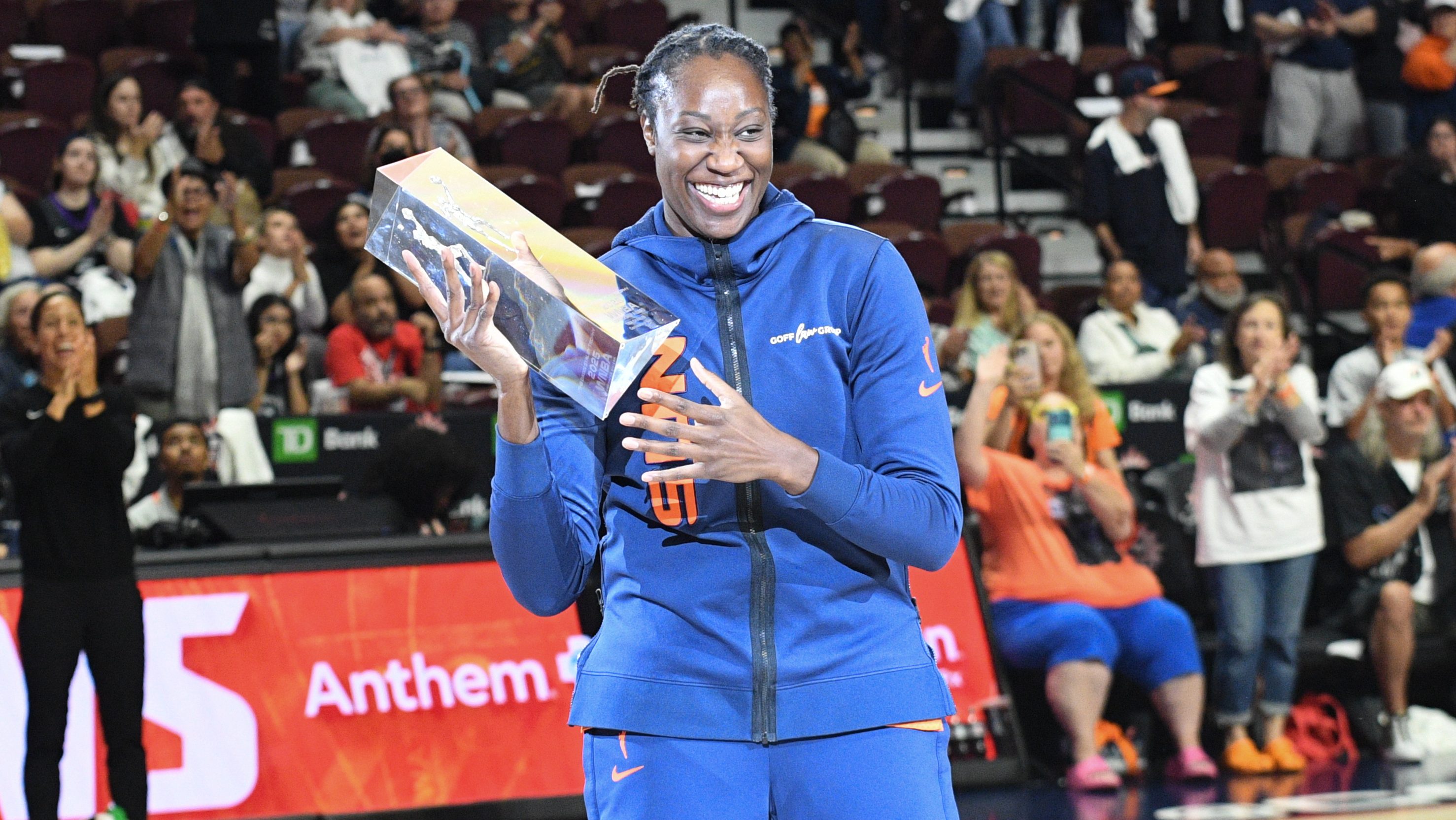
Photo · Andscape
What a League Looks Like When It Has Something to Lose
Imagine two doorways, side by side. One woman exits through the left. Another enters through the right. In most sports, only one of those moments gets a headline, and you already know which one.
But something shifted this spring, quietly enough that you might miss it if you weren't paying attention — which is exactly the kind of thing worth paying attention to.
The WNBA opened its 30th season this year. Thirty seasons. That number deserves a beat of silence before anything else gets said about it, because longevity in women's professional sports is not guaranteed, has never been guaranteed, and every year the league has survived has been a small act of institutional will. Season 30 arrives with Caitlin Clark returning to the court and Tina Charles stepping off it for the last time, and the collision of those two facts says something larger than either story does alone.
Charles announced her retirement this week, closing out fifteen years at the professional level — her words, per Andscape's coverage. Eight All-Star selections. The 2012 WNBA MVP. Former teammates, according to reporting from Andscape, spoke not just to her statistical record but to something harder to quantify: the way she made the game feel like it mattered, the way her presence extended beyond whatever happened on the scoreboard. That's the kind of legacy that doesn't show up in a box score, and it rarely gets written about in places where people who don't already follow the WNBA will find it.
The Gravity of the Ordinary
In most major sports leagues, retirement and return are unremarkable events. Players cycle in and out every season. The machinery absorbs it. The coverage continues. The audience, which has been there for decades, understands that this is how it works — that departures honor what came before, and arrivals promise what comes next.
The WNBA is only now arriving at that kind of ordinary.
The Guardian's coverage of 2026 storylines lists Caitlin Clark's return alongside a UConn reunion, the Dallas Wings' offseason moves, and a conversation about which franchise currently holds the most value. That list — a mixture of star power, team narrative, and league-level economics — reads like the kind of preview any established league produces before a season. It reads, in other words, like normalcy. And normalcy, for a league that has spent three decades fighting for legitimacy, is genuinely radical.
I keep coming back to that framing. The WNBA at 30 is a league that can now absorb its own history. It can mourn a great player's exit without the mourning feeling like a eulogy for the institution itself. It can celebrate a star's return without the celebration feeling like the entire enterprise depends on her showing up. Both things can be true simultaneously, and they can share space in the same season preview, and neither has to carry the weight of saving the league.
That's new. That matters more than any individual storyline.
What Fifteen Years Actually Buys
Tina Charles played fifteen years at the professional level. Think about what that span contains — the roster turnover, the franchise relocations, the labor negotiations, the seasons that got played in bubbles and seasons that almost didn't get played at all. Fifteen years of showing up, of being good enough that people who cover this sport had to reckon with her, of doing the work in a league where the work was never rewarded the way comparable work was rewarded elsewhere.
Her former teammates, as Andscape reported, talked about impact that extends beyond the court. That phrase gets used a lot in sports, often as a soft consolation for players who didn't quite win enough. Here it reads differently. Here it reads like a description of what it takes to build something that outlasts you — to play in a league long enough that the league itself becomes part of your legacy, and you become part of its.
Caitlin Clark's return is the other side of that coin. She arrives into a structure that players like Charles spent careers reinforcing. The attention Clark draws, the commercial interest, the packed arenas — none of that exists without the fifteen-year careers that came before it, without the eight All-Star selections, without the people who stayed when leaving would have been easier.
Season 30
The Guardian framed the 2026 season as a moment to examine the past, present, and future of the game simultaneously. That's the right frame. This is a season where the league is old enough to have a history worth honoring and young enough that the best of it still feels ahead.
Two doorways. One woman leaving, one returning. In another era, only one of those moments would have felt like it counted.
Now both do. That's thirty seasons of work, and it shows.
Keep reading sports.

ESPN Named Him. Then Unnamed Him. Nobody's Explaining the Gap.
A retraction without a reckoning is just a deleted link.

Three People Died Celebrating. FIFA Hasn't Said Their Names.
Mexico City buried three people after the World Cup crowds came through. At some point, the sport has to sit with that.

Sell the Stadium, Lose the Room
NFL franchises are rolling out the welcome mat for World Cup tourists — and the desperation is showing.
From the other desks.

800 Horsepower, One Ton of Doubt
Lamborghini built the most powerful SUV it's ever made. It's also slower than what it replaced.

Gold Leaf on a Lacquer Dial, and the Weight of What That Costs
Awake's Frosted Leaf Royal Blue asks a question Vietnamese craft has never quite had to answer at this price.

Hide My Email Has Been Showing Your Email
Apple's privacy flagship has a hole in it. They've known for over a year.