The Government Blinked
A federal judge just ruled that pressuring platforms to kill ICE-tracking tools violated the First Amendment — and for once, the surveillance state lost the room.

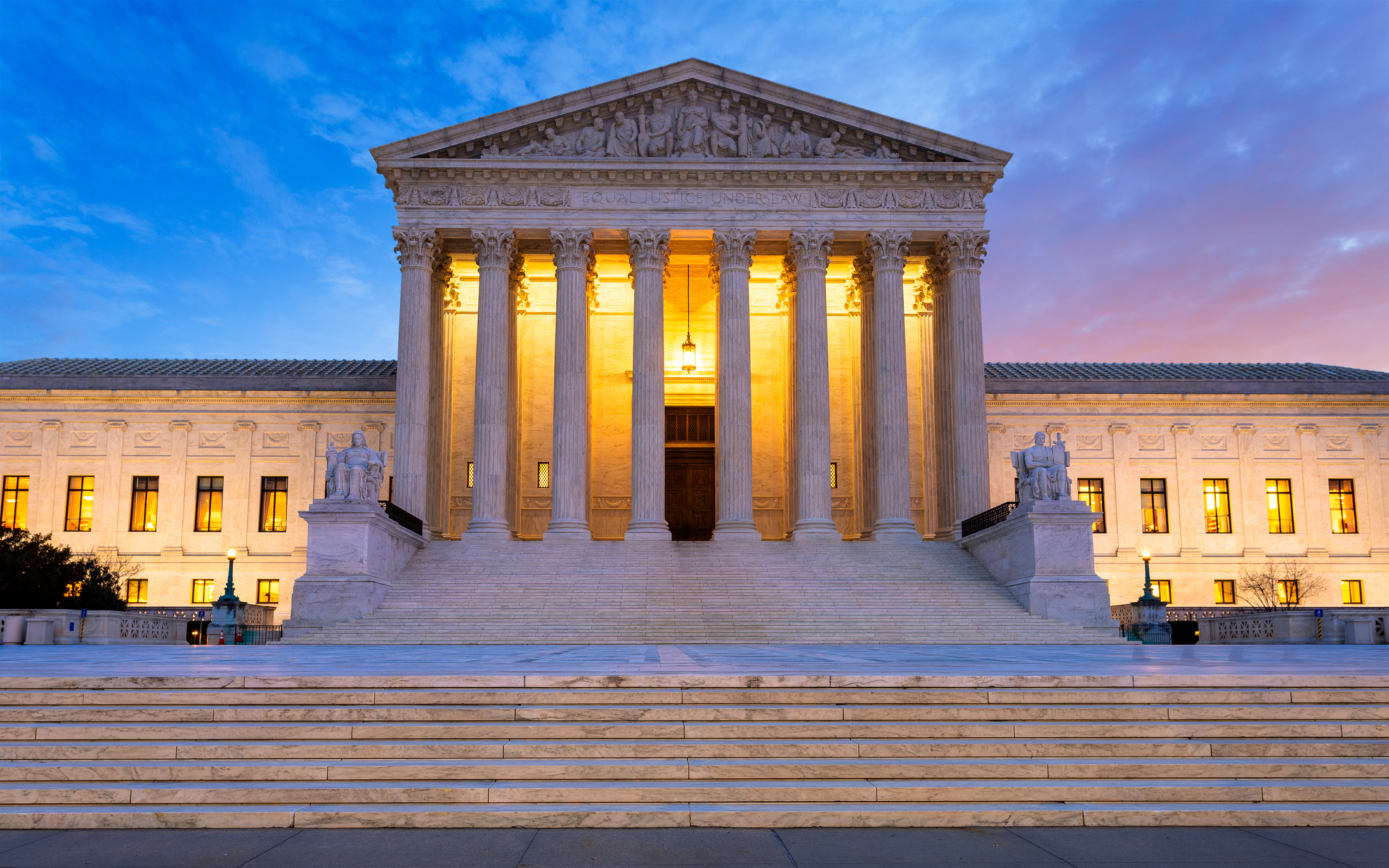
Photo · The Verge
There's a tell when a government overreaches: it doesn't just act, it tidies up after itself. It calls Apple. It calls Facebook. It makes the thing disappear and hopes nobody notices the fingerprints.
Somebody noticed.
The Setup
Two tools. One a Facebook group — ICE Sightings - Chicagoland, run by Kassandra Rosado — the other an app called Eyes Up, built by a developer group called Kreisau. Both used publicly available information to track ICE activity. Neither was hacking a database or surveilling agents in their homes. They were doing what neighborhood watch groups have done forever, just with better distribution. After pressure from Trump administration officials, Apple pulled Eyes Up from the App Store and Facebook removed the group. Clean. Quiet. Done.
Except it wasn't.
Judge Jorge L. Alonso of the Northern District of Illinois granted both Rosado and Kreisau a preliminary injunction, finding they are likely to succeed in their First Amendment claim. His ruling leaned on a unanimous 2024 Supreme Court decision involving the NRA and a former New York financial regulator — a case that established the government cannot use backroom pressure on third parties to accomplish what it couldn't do directly. You can't ban the speech yourself, so you call the platform and let them do it for you. That's coercion. That's the violation.
This is not a complicated legal theory. It's the oldest trick in the authoritarian playbook, and the court named it plainly.
The Wider Picture
Meanwhile, over at the FAA, a quieter retreat was underway. According to 404 Media, the agency scrapped civil and criminal penalties for flying drones near ICE vehicles — a rule that had briefly made aerial documentation of immigration enforcement a potential federal offense. The government also expanded the list of protected agencies to include the Department of Justice. So the penalties went away, but the scope of protection grew. That's not a concession. That's a reorganization.
The drone rule and the app takedowns are different mechanisms pointing at the same impulse: limit what the public can see, document, and share about how enforcement actually operates on the ground. One approach went through the courts and lost. The other got quietly restructured before it could.
Note that in some Minneapolis neighborhoods, according to reporting from The Verge, nearly every house has an anti-ICE sign. This is not a niche concern happening at the margins of public life. The audience for these tools is not small, and the government knew it.
What This Actually Means
Preliminary injunctions are not verdicts. The case continues. The administration can appeal, delay, or find another angle. Anyone who's watched this cycle before knows the story doesn't end with one favorable ruling.
But something did happen here that doesn't happen often: the mechanism of suppression got named in open court, tied to a precedent the Supreme Court set unanimously, and blocked — at least for now. Rosado's group goes back up. Eyes Up has legal cover to exist while the case plays out. The platforms that pulled these tools under government pressure are now on notice that "the government asked us to" is not a liability shield, it's a liability.
That's the shift. Not that the surveillance state retreated — it didn't, not really — but that surveillance resistance finally has a legal framework that holds. The government built a wall using private hands, and a judge pointed at the seam.
You can outsource the censorship. You can't outsource the accountability.
Keep reading tech.

Hide My Email Has Been Showing Your Email
Apple's privacy flagship has a hole in it. They've known for over a year.

Sony Killed the Disc. Sony Is Also Killing the Store.
Two announcements, one company, and a quiet admission that "ownership" was always their word to define.
Apple Went to the Highest Court It Could Find. That Tells You Everything.
When a contempt ruling sends you to the Supreme Court, you're not defending a policy anymore — you're defending a worldview.
From the other desks.

800 Horsepower, One Ton of Doubt
Lamborghini built the most powerful SUV it's ever made. It's also slower than what it replaced.

Gold Leaf on a Lacquer Dial, and the Weight of What That Costs
Awake's Frosted Leaf Royal Blue asks a question Vietnamese craft has never quite had to answer at this price.

ESPN Named Him. Then Unnamed Him. Nobody's Explaining the Gap.
A retraction without a reckoning is just a deleted link.