The Grid Doesn't Care About Your Roadmap
AI companies promised to build the future. Turns out the future has a zoning board.
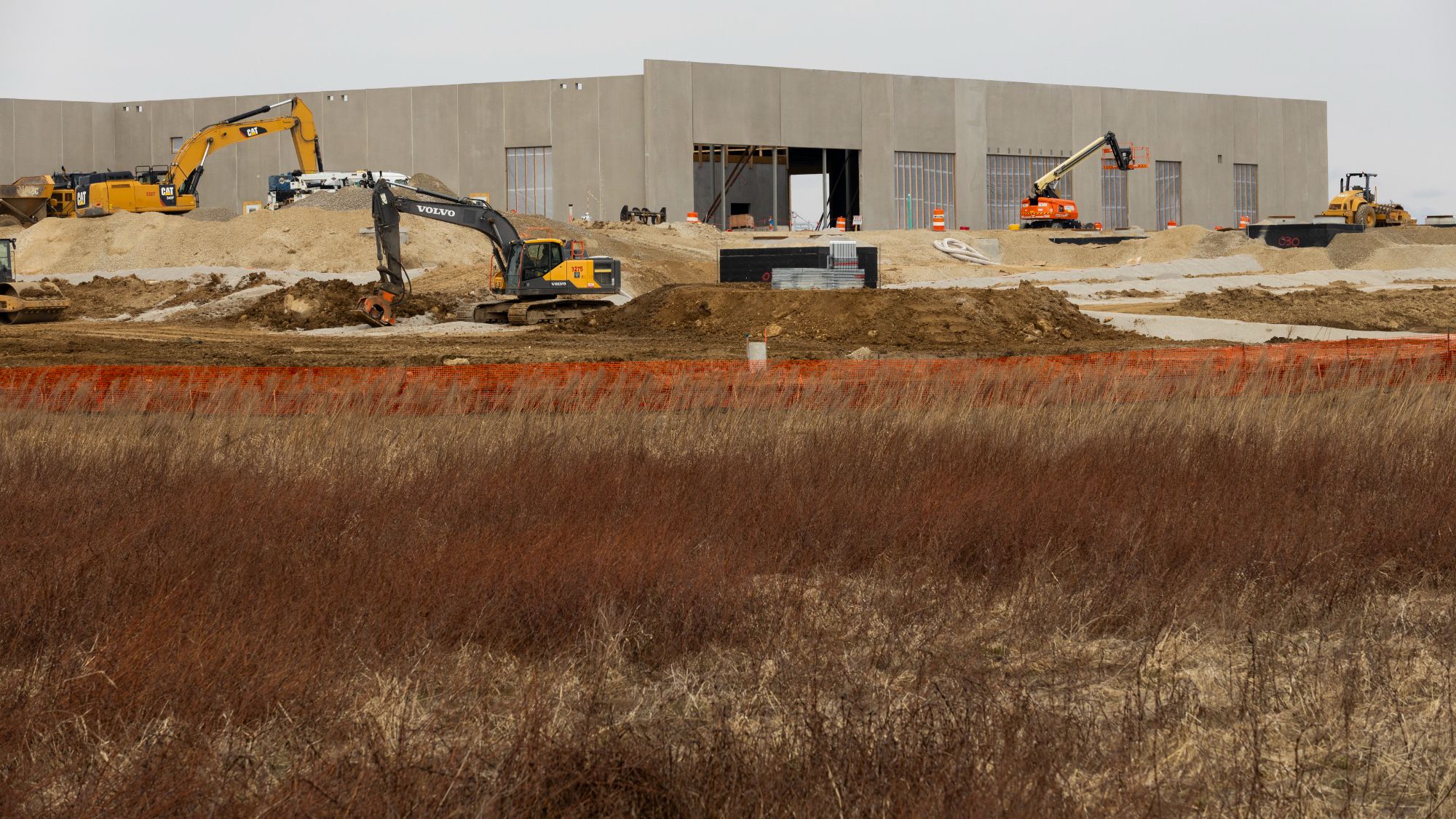
Photo · Latest from Tom's Hardware
Here's the thing about infrastructure fantasies: they always sound inevitable right up until they don't.
The AI industry has spent the better part of two years telling anyone who would listen that the data centers are coming, the compute is coming, the transformation is coming — and that anyone standing in the way is simply standing on the wrong side of history. It's a familiar posture. And it's currently running headfirst into a wall made of satellite imagery, community meetings, and Bernie Sanders.
A data analytics group now estimates that at least 40% of AI data centers scheduled for completion in 2026 will be delayed, according to reporting from Tom's Hardware. The companies involved say everything is on schedule. The satellite imagery, apparently, disagrees. Labor shortages. Material shortages. The unglamorous physics of actually building something large in the physical world — none of it made the press release.
This is not a new story. Every technology wave that required physical infrastructure has eventually discovered that physical infrastructure is slow, expensive, and subject to the opinions of people who live near it.
The Public Didn't Get the Memo
What's different this time — and what the second and third sources make clear — is the breadth and character of the opposition. This isn't a few NIMBYs with yard signs. Communities across the country, and internationally, are using local courts, direct political pressure, and organized action to halt or cancel projects outright, per Tom's Hardware's coverage of mounting local revolts. The delays are reportedly already costing hyperscalers billions.
And then there's the Sanders dimension. The senator joined labor leaders to explicitly call for a halt to data center construction, framing the issue not as an environmental complaint or a noise ordinance but as a direct threat to the American workforce, according to TechRadar. "Go to hell" is the kind of rhetoric that signals a political coalition, not a fringe concern. When labor and local government find the same target, the math changes.
What's striking across all three sources is the gap between the story the industry tells and the one that's actually unfolding. The official line is: schedule intact, progress continues, trust the roadmap. The actual line is: satellite photos show stalled sites, billions in delays, and a growing national sentiment that has found political voice at the highest levels.
What They Keep Missing
The meta-problem here isn't logistics. It's legitimacy. The companies building these things have been extraordinarily good at explaining the upside to investors and extraordinarily bad at explaining it to the people who will live next to a facility that draws enormous amounts of power, water, and truck traffic — while the productivity gains accrue almost entirely elsewhere.
You can't satellite-image your way out of that. You can't schedule-optimize your way past a community that has decided the deal isn't worth it. And you definitely can't dismiss a labor movement as a delay variable when its central argument is that your product is designed to eliminate their jobs.
The industry keeps treating opposition as friction. Communities are starting to treat it as leverage.
Progress that only benefits the people building it has always had a shelf life. We're watching it expire in real time.
Keep reading tech.

Hide My Email Has Been Showing Your Email
Apple's privacy flagship has a hole in it. They've known for over a year.

Sony Killed the Disc. Sony Is Also Killing the Store.
Two announcements, one company, and a quiet admission that "ownership" was always their word to define.

Apple Went to the Highest Court It Could Find. That Tells You Everything.
When a contempt ruling sends you to the Supreme Court, you're not defending a policy anymore — you're defending a worldview.
From the other desks.

800 Horsepower, One Ton of Doubt
Lamborghini built the most powerful SUV it's ever made. It's also slower than what it replaced.

Gold Leaf on a Lacquer Dial, and the Weight of What That Costs
Awake's Frosted Leaf Royal Blue asks a question Vietnamese craft has never quite had to answer at this price.

ESPN Named Him. Then Unnamed Him. Nobody's Explaining the Gap.
A retraction without a reckoning is just a deleted link.