Dana White Got What He Wanted. Now Everyone Knows the Cost.
A White House fight card, a decades-long friendship, and what it means when a sports empire finally cashes in its political capital.
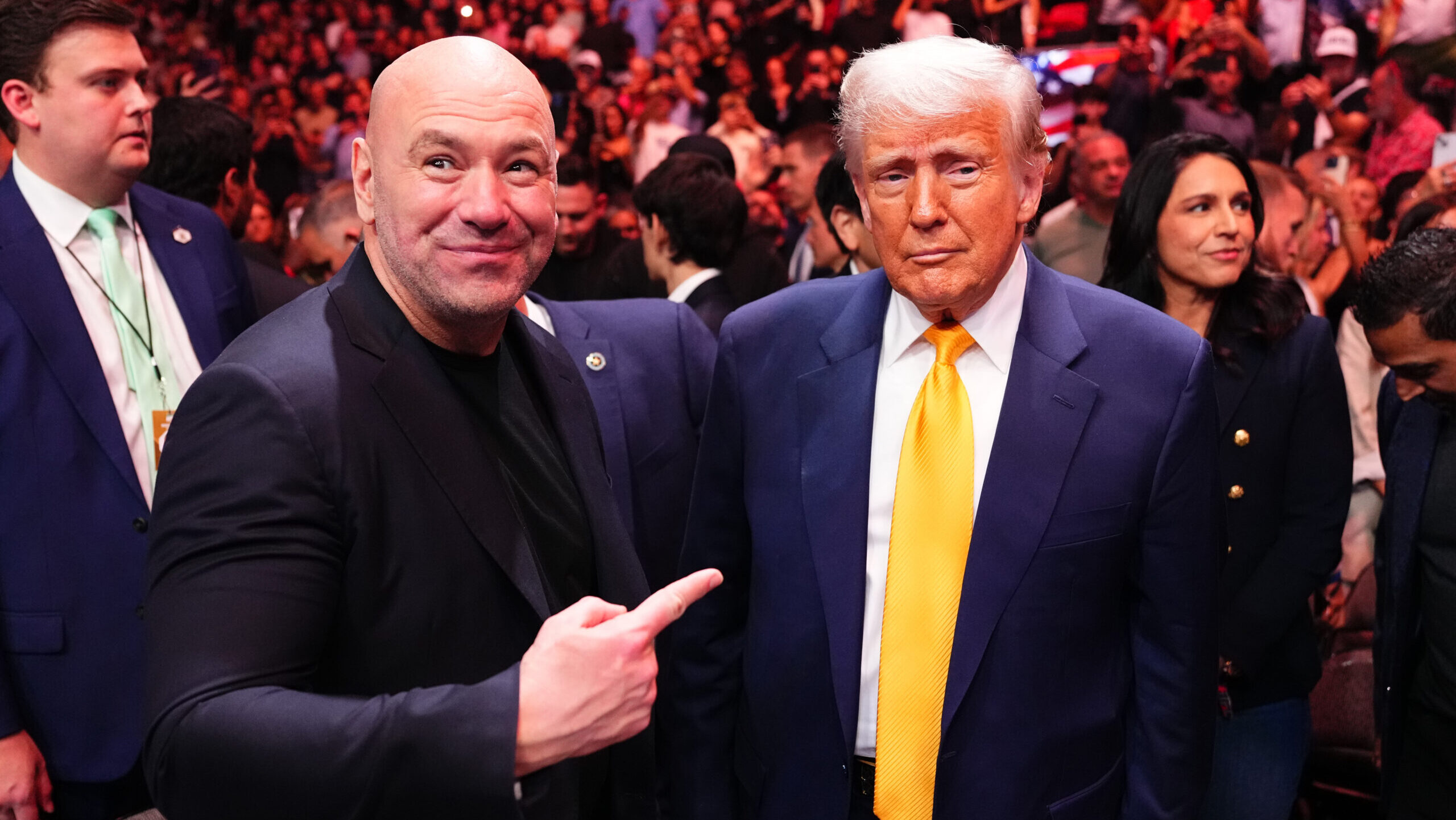
Photo · Boardroom
There's a version of Dana White's story that reads as pure American hustle — a guy who bet on a sport nobody respected and won so completely that the sport now belongs at the White House. That version is true. It's also incomplete.
White has been open, in two recent Boardroom conversations, about what got the UFC here. The friendship with Donald Trump goes back decades. When the UFC was still being dismissed — still fighting for legitimacy on basic cable, still being called human cockfighting in polite company — Trump was one of the people who gave it a platform. White has said this plainly. He doesn't dress it up. The relationship was real before either man had anything the other needed.
But that's not where the story ends. It's where it gets interesting.
When Access Becomes Infrastructure
A fight card at the White House isn't just a novelty booking. It's a signal. It says: this sport has arrived so completely that it can occupy the same physical and symbolic space as state power. For anyone who remembers when the UFC was being regulated out of existence in state after state, that image lands with genuine weight.
White knows what it means. In conversation with Rich Kleiman, he talked about building a sports empire — Zuffa Boxing, PowerSlap, the UFC itself — with the same blunt confidence he's always projected. He's not a man who second-guesses his moves in public. The White House card is, in his telling, a natural extension of a friendship, a reward for loyalty, a moment that reflects who he is and who Trump is to him.
And maybe that's all it is. Two people who've known each other a long time, one of whom now happens to run the country, doing something that makes both of them look powerful. Friendship in that zip code tends to be transactional without either party admitting it. That's not cynicism — it's just how proximity to power works.
But here's the thing that neither Boardroom piece quite names, though both circle it: the UFC spent years arguing that it deserved legitimacy on its own terms. On the merits of the sport. On the athleticism, the strategy, the global reach. White made that case relentlessly, and he wasn't wrong to make it. The sport earned its audience.
The Price of the Room
Now the ultimate marker of that legitimacy is a fight card arranged through a political friendship. Not a Super Bowl halftime slot. Not an Olympic inclusion. Not a moment that the sport's competitive excellence alone secured. A room that became available because of who Dana White knows and where he stood on a convention stage.
That's not a disqualification. It's a complication. Every major sports empire has climbed on someone's back at some point — networks, municipalities, politicians, billionaires. The UFC is not unique in owing favors. It's just unusually transparent about this particular one.
White is, if nothing else, honest about his allegiances. He doesn't pretend the Trump relationship is separate from his business life. He integrates them openly, almost defiantly. There's something almost refreshing about that, in an era when most executives launder their political access through foundations and vague partnerships.
But refreshing and consequence-free aren't the same thing. The UFC's legitimacy was always going to have a ceiling — not because the sport isn't real, but because legitimacy in America is always partly political, always partly relational, always partly about who vouches for you in the right room.
Dana White found his room. He's been building toward it for thirty years.
The question nobody's asking out loud is what happens when the room changes hands.
Keep reading sports.

ESPN Named Him. Then Unnamed Him. Nobody's Explaining the Gap.
A retraction without a reckoning is just a deleted link.

Three People Died Celebrating. FIFA Hasn't Said Their Names.
Mexico City buried three people after the World Cup crowds came through. At some point, the sport has to sit with that.

Sell the Stadium, Lose the Room
NFL franchises are rolling out the welcome mat for World Cup tourists — and the desperation is showing.
From the other desks.

800 Horsepower, One Ton of Doubt
Lamborghini built the most powerful SUV it's ever made. It's also slower than what it replaced.

Gold Leaf on a Lacquer Dial, and the Weight of What That Costs
Awake's Frosted Leaf Royal Blue asks a question Vietnamese craft has never quite had to answer at this price.

Hide My Email Has Been Showing Your Email
Apple's privacy flagship has a hole in it. They've known for over a year.