Doug Martin's Parents Filed Eight Claims. The Ninth Is Unwritten.
A lawsuit over a former NFL player's death in police custody asks whether institutions built to protect themselves can ever admit what happened.
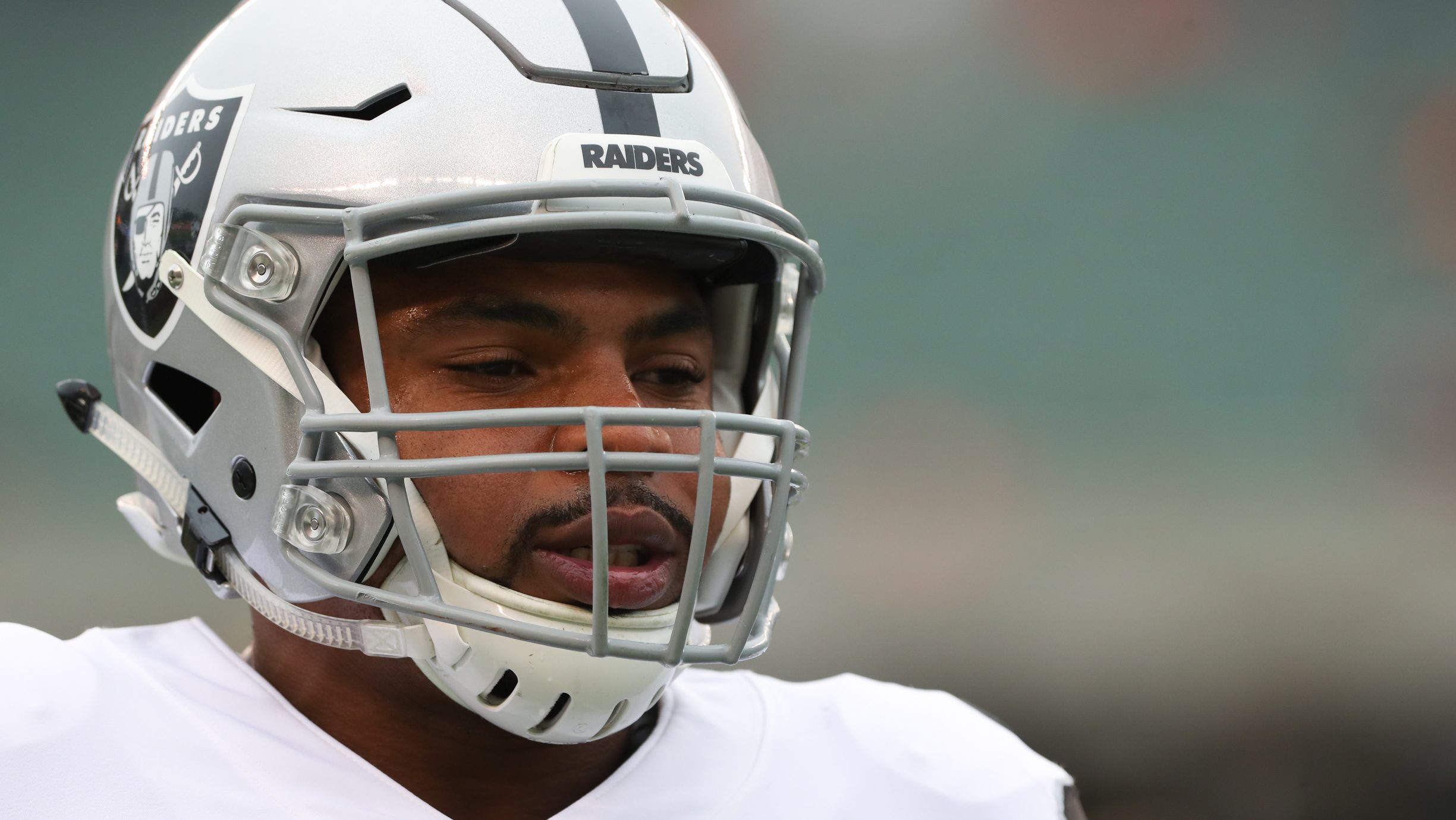
Photo · Defector
Eight months after Doug Martin died in Oakland police custody, his parents walked into federal court with eight claims and one question underneath all of them: does any of this actually work?
A writer at Defector reported this week on the lawsuit — filed in federal court in Northern California, first surfaced by Jakob Rodgers of the East Bay Times — that names the city of Oakland, five of its officers, and an ambulance company as defendants. The allegations are specific and damning. Martin, who was 36 years old, died from restraint asphyxia, according to the suit. Paramedics didn't arrive until more than fifteen minutes after the call for service. The legal claims include wrongful death by negligence, assault and battery, and intentional infliction of emotional distress.
That's eight claims. Read them as a list and they feel bureaucratic. Read them as a sequence — what happened, then what didn't happen, then what that cost — and they feel like a portrait of a system failing in layers.
The Name Is the News
Doug Martin played in the NFL. That's why this story is in a national publication, and it's worth sitting with the discomfort of that for a moment — not to indict the coverage, but to acknowledge what it reveals. Restraint asphyxia in custody is not a new phenomenon. Families suing over police conduct in federal court is not a new story. What changes here is the name recognition, and with it, the scale of attention.
That's not cynical. That's just how accountability journalism works, and sometimes works better than nothing at all.
But here's what the name actually does in a case like this: it makes denial harder. It raises the cost of institutional stonewalling. When the person who died was once a known public figure — someone whose name people recognize, whose career people followed — the default response of silence and procedural delay becomes a more visible choice. The city of Oakland, the five named officers, the ambulance company — they all have to decide how loudly they want to defend themselves against a claim that involves a name people know.
What the Lawsuit Can't Fix
The eight claims are a legal instrument. They are designed to produce a resolution — a settlement, a verdict, a finding. What they cannot do, regardless of outcome, is answer the question the moment actually raises: whether the institutions involved are capable of treating accountability as something other than a threat to be managed.
Restraint asphyxia is not ambiguous as a cause of death. It is a documented, understood mechanism. The fifteen-minute gap between a call for service and paramedic arrival is a number. These are not interpretive disputes. They are either what happened or they aren't. And the lawsuit's existence — filed by parents, eight months after the fact, in federal court — suggests that the path to simply acknowledging what happened was not made available to them any other way.
That's the real story. Not the claims themselves, but the infrastructure that makes filing them the only option. Lawsuits are how you force a conversation that should have already happened. They are slow, expensive, and adversarial by design. They are also, in many of these cases, the only door that opens.
Martin's parents deserve more than a settlement that includes no admission of wrongdoing. Whether they get it is a different question — and one that the court, more than any institution named in those eight claims, will have to answer.
Keep reading sports.

ESPN Named Him. Then Unnamed Him. Nobody's Explaining the Gap.
A retraction without a reckoning is just a deleted link.

Three People Died Celebrating. FIFA Hasn't Said Their Names.
Mexico City buried three people after the World Cup crowds came through. At some point, the sport has to sit with that.

Sell the Stadium, Lose the Room
NFL franchises are rolling out the welcome mat for World Cup tourists — and the desperation is showing.
From the other desks.

800 Horsepower, One Ton of Doubt
Lamborghini built the most powerful SUV it's ever made. It's also slower than what it replaced.

Gold Leaf on a Lacquer Dial, and the Weight of What That Costs
Awake's Frosted Leaf Royal Blue asks a question Vietnamese craft has never quite had to answer at this price.

Hide My Email Has Been Showing Your Email
Apple's privacy flagship has a hole in it. They've known for over a year.