HBCUs Didn't Wait for Women's Flag Football to Arrive. They Built the Room.
A freshman at Winston-Salem State grew up wanting to play football and had no idea what came next. Now she does — because Black institutions decided to answer that question themselves.
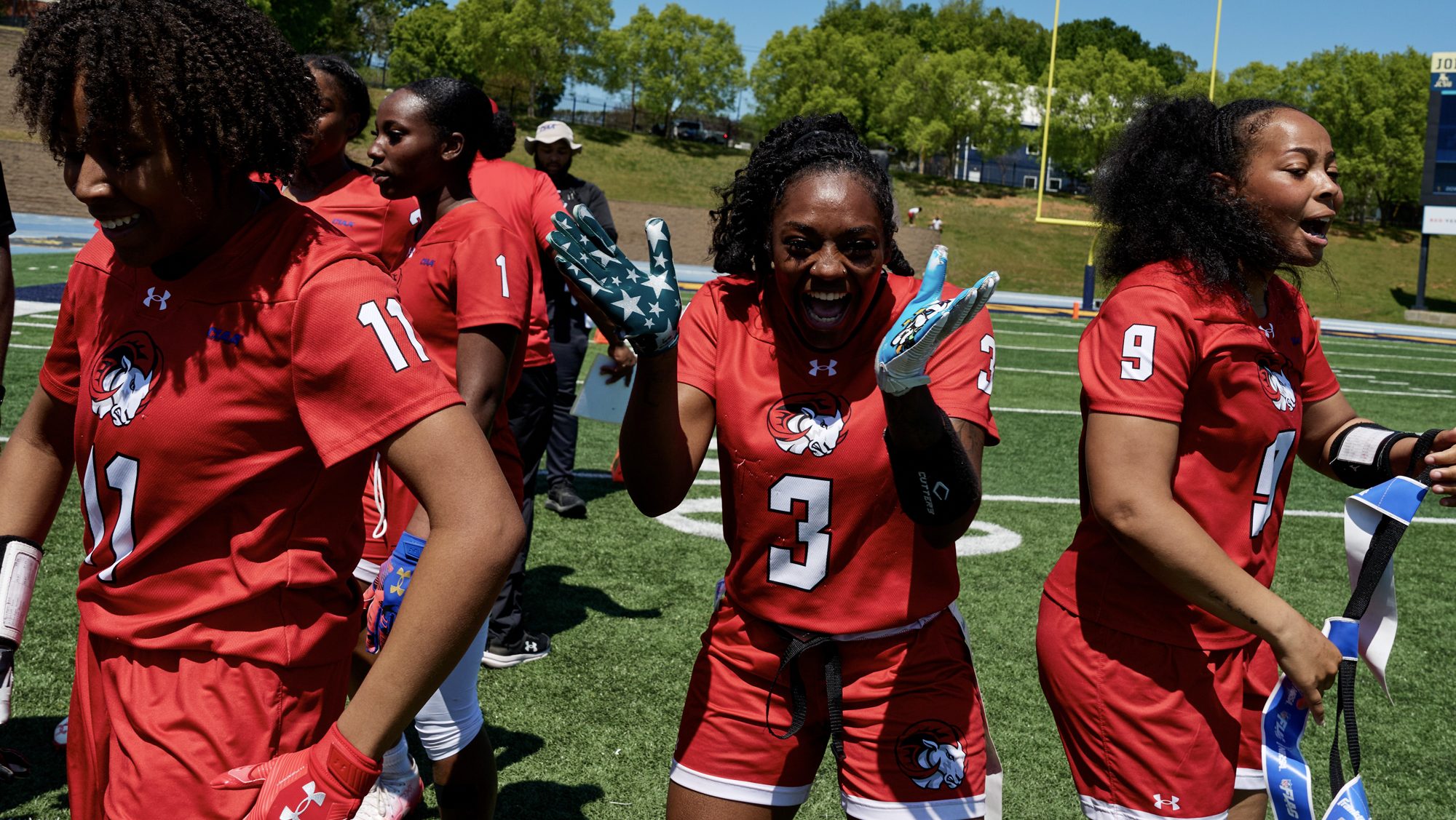
Photo · Andscape
By age six, she already knew. A writer at Andscape opens with that detail about a Winston-Salem State freshman named Eshé Muhammad — raised watching her brothers play tackle football, pulled immediately toward her high school's flag football team, but carrying a specific and familiar kind of uncertainty: what happens after?
That question used to dissolve into silence. For young women who loved football — not as a metaphor, not as a sideline, but as the actual sport — there was no clear answer waiting on the other side of high school. And then HBCUs decided to stop waiting for someone else to build one.
The Andscape piece is worth paying attention to not because it announces something obvious, but because it names something that's been quietly happening: historically Black colleges and universities are at the front of women's flag football's growth. Not trailing it. Not joining it. Leading it.
The Pipeline Problem Nobody Else Was Solving
This is the part that deserves to sit with you for a moment.
Mainstream sports institutions — the ones with the facilities, the television deals, the infrastructure that gets called "the pipeline" — looked at women's flag football and largely didn't move. The gap between a girl playing in high school and anything resembling a collegiate future stayed wide. Wide enough that a freshman arriving at Winston-Salem State last year could say she had little insight into what opportunities existed beyond graduation.
Little insight. In 2024. For a sport that has been growing for years.
HBCUs saw that gap and built into it. That's the story the Andscape piece is really telling, even if it opens with a personal portrait. Muhammad's journey from her brothers' backyard football to a college roster isn't just a feel-good arc — it's evidence of an institutional decision. Someone at Winston-Salem State decided this program should exist. Someone decided a recruit like Muhammad deserved a destination.
What It Means When You Build the Infrastructure
There's a version of this story that gets told as uplift — look at these schools doing something wonderful. That version is fine, but it undersells what's actually happening.
When you build the infrastructure, you control the culture of the sport at its formation. The programs shaping women's flag football right now, at the collegiate level, are HBCU programs. The coaches coming up through this system, the norms being established, the competitive standards being set — those are being written by Black institutions. That's not a small thing. In sports, whoever builds the early pipeline tends to shape the sport's identity for a generation.
Mainstream athletic departments will eventually arrive — money and media attention have a way of drawing them in. But they'll be arriving into a space that HBCUs already defined. They'll be recruiting players who were developed in programs that Black colleges built when no one else was paying attention.
Muhammad's story, as the Andscape writer frames it, is about personal discovery — a young woman finding out that a future in this sport exists. But zoom out and it's also about institutional courage. Somebody had to decide the future existed before the recruit could find it.
The question worth carrying forward isn't whether women's flag football grows. It will. The question is who gets credit for the foundation when everyone shows up to celebrate the house.
Keep reading sports.

ESPN Named Him. Then Unnamed Him. Nobody's Explaining the Gap.
A retraction without a reckoning is just a deleted link.

Three People Died Celebrating. FIFA Hasn't Said Their Names.
Mexico City buried three people after the World Cup crowds came through. At some point, the sport has to sit with that.

Sell the Stadium, Lose the Room
NFL franchises are rolling out the welcome mat for World Cup tourists — and the desperation is showing.
From the other desks.

800 Horsepower, One Ton of Doubt
Lamborghini built the most powerful SUV it's ever made. It's also slower than what it replaced.

Gold Leaf on a Lacquer Dial, and the Weight of What That Costs
Awake's Frosted Leaf Royal Blue asks a question Vietnamese craft has never quite had to answer at this price.

Hide My Email Has Been Showing Your Email
Apple's privacy flagship has a hole in it. They've known for over a year.