Nobody Asks About the Goals Anymore
From a soccer dad in Amsterdam to an actor hanging off a cliff in Australia, every profile now wants the same thing — what broke you, and how.
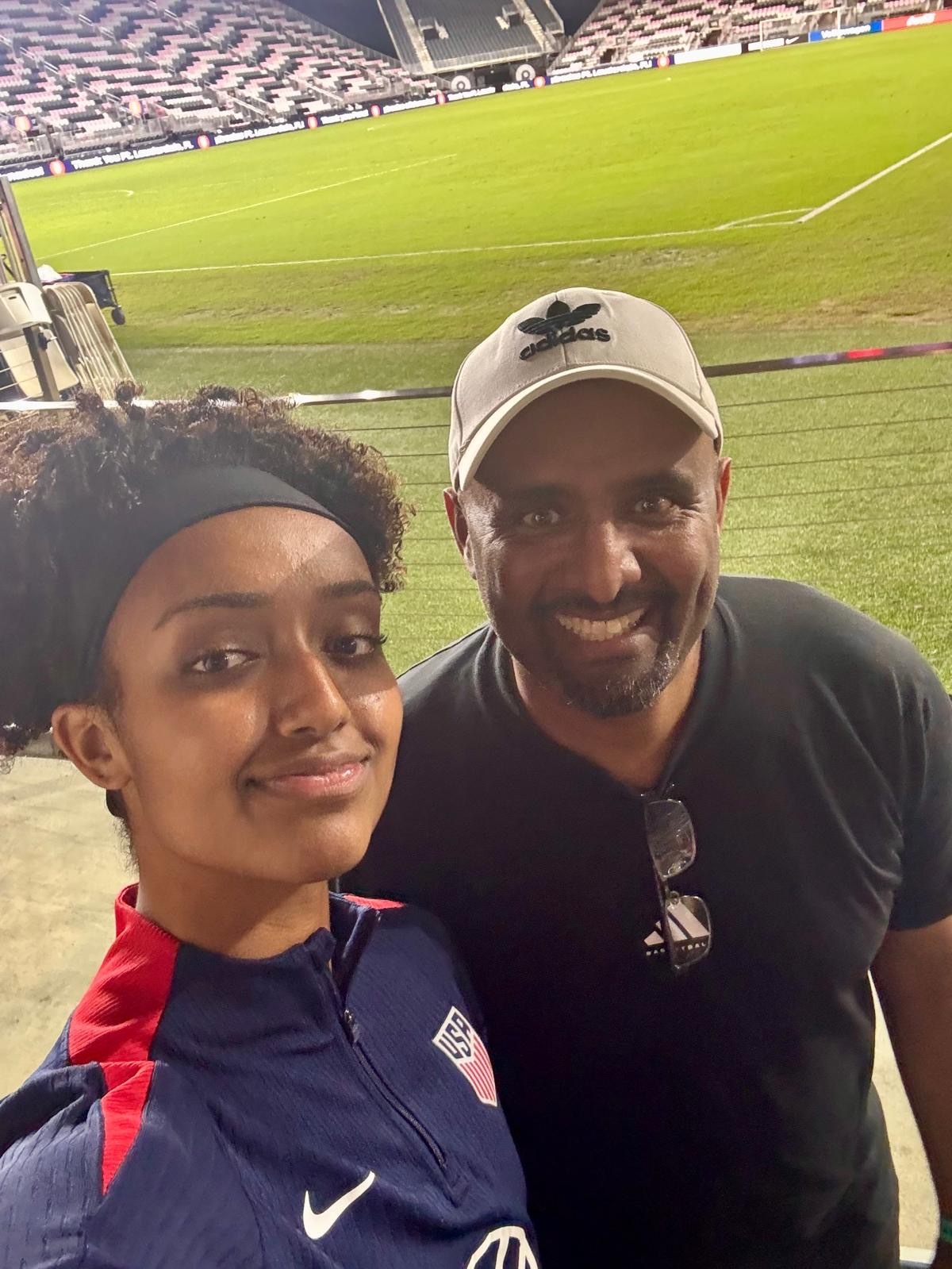
Photo · Defector
There's a pattern forming in how we tell stories about people who are very good at things. The achievement gets a paragraph. The wound gets the feature.
Defector sat down with the father of Lily Yohannes — the 18-year-old OL Lyon midfielder who, at 16, became the youngest player ever to start a Champions League group stage match — and the piece is genuinely warm and revealing. But notice where the gravity is. Not in her technique. Not in the through balls. In the family. In what it took to raise her. In the texture of a household that produced three professional athletes, including brothers Jayden and Aethan, both playing in the Netherlands. The soccer is the door. The family is the room.
Around the same time, Outside Online ran a piece on actor Taron Egerton, pegged to a film called Apex, shot in the Australian wilderness. The hook: Egerton has a deep-seated fear of heights, and the film required him to push through it alongside co-star Charlize Theron. He described the experience as causing what he called "cognitive fog" on set. That's the story. Not the performance. Not the film's premise. The confession.
The Confession Is the Currency
These two pieces have nothing to do with each other. One is sports. One is entertainment. One is about an 18-year-old phenomenon. One is about a grown man on a cliff in the Southern Hemisphere. But they're running the same play.
Vulnerability is no longer the sidebar. It's the lead. The question isn't how did you do it — it's what did it cost you, and can you describe the feeling in your own words? Readers want the fracture line. Editors know it. Subjects have learned to provide it.
This isn't entirely cynical. A father talking about parenting a child who plays soccer at the highest level in the world at 16 — there's real tenderness there, real stakes. You want to know what that house felt like, what conversations sounded like at dinner, what it means to watch someone you raised become something you couldn't have planned. That's human. That lands.
And Egerton copping to cognitive fog on a film set — that's not weakness theater. Fear of heights is real. Working through it for a role, alongside another actor doing the same, is a legitimate story about craft and exposure and what performance actually demands of a body.
What We're Trading Away
But here's the friction I keep returning to: Lily Yohannes is described, in the Defector piece, as having the vision of an artist — someone whose dribbling sequences and long balls are among the most beautiful the game has seen. That's a serious claim about a serious talent. She is, by the piece's own framing, the USWNT's best midfield prospect in a decade.
And we're interviewing her dad.
Not her. Her dad.
That's a choice. Maybe she's said what she has to say. Maybe the access was different. Maybe the father interview reveals something a player interview couldn't. All possible. But it also fits a template: when the subject is very young, very accomplished, and very composed, we find the emotional proxy. Someone who can give us the feeling she might not perform on command.
The Egerton piece does something similar — the film is the vehicle, the fear is the destination. The wilderness setting, the physical danger, the co-star dynamic: all of it exists to deliver one man's account of confronting something that scared him.
This is what profiles are now. Not documentation. Not interrogation. Controlled emotional disclosure, packaged as access.
We used to want to know what greatness looked like up close. Now we want to know what it felt like to almost not make it.
Keep reading sports.

ESPN Named Him. Then Unnamed Him. Nobody's Explaining the Gap.
A retraction without a reckoning is just a deleted link.

Three People Died Celebrating. FIFA Hasn't Said Their Names.
Mexico City buried three people after the World Cup crowds came through. At some point, the sport has to sit with that.

Sell the Stadium, Lose the Room
NFL franchises are rolling out the welcome mat for World Cup tourists — and the desperation is showing.
From the other desks.

800 Horsepower, One Ton of Doubt
Lamborghini built the most powerful SUV it's ever made. It's also slower than what it replaced.

Gold Leaf on a Lacquer Dial, and the Weight of What That Costs
Awake's Frosted Leaf Royal Blue asks a question Vietnamese craft has never quite had to answer at this price.

Hide My Email Has Been Showing Your Email
Apple's privacy flagship has a hole in it. They've known for over a year.