Congress Found the Bill. Turns Out EV Drivers Were Always Going to Get It.
A $130 annual fee isn't a punishment — it's an admission that the math was never what the messaging claimed.
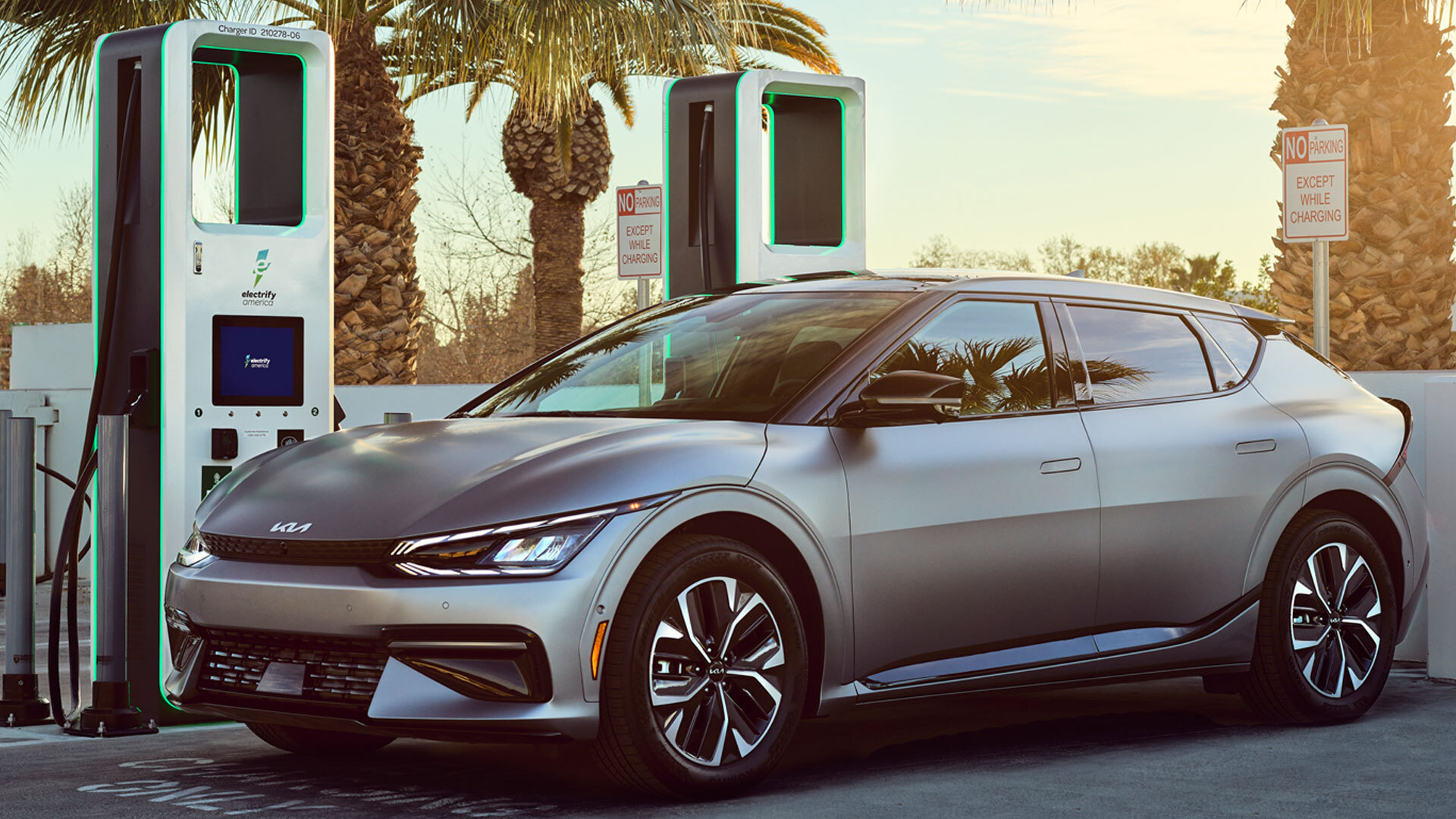
Photo · Carscoops
Here's what the proposal doesn't say out loud: the free ride was a recruitment tool, not a policy.
Congress is now moving toward charging EV owners $130 a year — a fee designed to replace what those drivers skip at the pump in federal gas taxes. The logic is tidy. Gas taxes fund highways. EV drivers use highways. EV drivers don't buy gas. Therefore: pay up. Carscoops framed it as the end of a bypass. InsideEVs asked whether $130 is actually fair. Both are the right questions. Neither is the most uncomfortable one.
The most uncomfortable one is this: if EVs were always going to end up here — taxed, tracked, billed for road use — what exactly was the subsidy for?
The Math Always Existed
The federal gas tax has been the highway funding mechanism for decades. When EV adoption was a rounding error, letting those drivers slide cost the system almost nothing. Now that the numbers are real, the exemption has become a real gap. That's not a scandal — that's arithmetic catching up to politics.
What's worth sitting with is how the conversation has shifted. The original pitch for EVs leaned heavily on environmental benefit, on pulling combustion engines off the road, on cleaner air and a lighter grid footprint. The new pitch from Congress is about fairness — specifically, that EV owners aren't paying their fair share into infrastructure. InsideEVs pointed out the question embedded in that framing: fair compared to what? A flat $130 annual fee doesn't scale with mileage, vehicle weight, or how hard any given driver actually works the road surface.
A half-ton pickup doing 25,000 miles a year does more pavement damage than a compact EV doing 8,000. The gas tax is imperfect but it at least correlates — loosely — with usage. A flat fee is simpler, politically cleaner, and less precise.
What the Fee Actually Confesses
The $130 number is small enough that it won't break anyone's budget and large enough to signal intent. This is Congress saying: the grace period is over. And maybe it should be. Roads cost money. Somebody has to pay for them.
But watch how quickly the environmental framing evaporates once money enters the room. The same legislative energy that spent years building tax credits and purchase incentives for EVs — on the premise that adoption serves a public good — is now recasting those drivers as infrastructure freeloaders. Both things can't be equally true at the same time.
Either EV adoption is a public benefit worth subsidizing, in which case some road funding discount is part of the deal. Or it's a consumer choice like any other, in which case the subsidies were always just market distortion. Congress seems to want to run both arguments depending on the quarter.
Drivers who bought in early — who paid more for the vehicle, built their lives around charging infrastructure that still isn't reliable everywhere, and absorbed the friction of being early adopters — are now watching the terms quietly shift. That's not catastrophic. $130 is $130. But it is clarifying.
The free ride wasn't a reward for doing the right thing. It was a price to get you in the car. Now you're in it, and the price just changed.
Welcome to driving. Same as it ever was.
Keep reading cars.

800 Horsepower, One Ton of Doubt
Lamborghini built the most powerful SUV it's ever made. It's also slower than what it replaced.

£11,990 Draws a Line Under Every Excuse You Had Left
Dacia just made the cheapest new car in Britain electric — and that's not a footnote, it's a verdict.

Blanc Éternel Hides Its Speed Behind a Gas Cap
Bugatti built a 261-mph roadster and made sure you'd notice the porcelain first.
From the other desks.

Gold Leaf on a Lacquer Dial, and the Weight of What That Costs
Awake's Frosted Leaf Royal Blue asks a question Vietnamese craft has never quite had to answer at this price.

ESPN Named Him. Then Unnamed Him. Nobody's Explaining the Gap.
A retraction without a reckoning is just a deleted link.

Hide My Email Has Been Showing Your Email
Apple's privacy flagship has a hole in it. They've known for over a year.