Two Cities, Zero Cars, One Announcement
Tesla called it an expansion. The data called it something else.

Photo · Electrek
The Launch That Wasn't
Here's what a product launch looks like when the product isn't ready: you draw a small shape on a map, post it to X, and let the stock do the rest.
Tesla expanded its Robotaxi service to Dallas and Houston this week — the first time the company has pushed beyond Austin and San Francisco. Two new cities. Two new maps. One announcement that landed, as these things tend to, right before earnings.
The maps are worth looking at. According to early user analysis cited by Electrek, Houston's geofence covers approximately 25 square miles. Dallas centers around the Highland Park area — similarly compact. For comparison, Tesla's Austin zone has grown to roughly 245 square miles, but it took nearly a year to get there, starting from an initial footprint of around 20 square miles. So Dallas and Houston are, at best, where Austin was on day one. Except Austin had cars.
Data from Robotaxi Tracker, as reported by Electrek, showed 0% to 2% availability across both new cities in the first 24 hours of the so-called launch. There was a brief window — a narrow morning spike — where availability climbed to around 50%, then collapsed back to zero. The implication is hard to avoid: Tesla may have deployed a single vehicle, or something close to it, in each city, and declared the mission accomplished.
That's not a rollout. That's a press release with wheels.
What They Didn't Say
The announcement, posted on X, included a 360-degree panning shot of a Robotaxi interior — no safety monitor visible. Which matters, because the Austin launch originally came paired with what Tesla called a "Tesla Safety Monitor," a supervising human riding along in the passenger seat. Earlier this year, Tesla began phasing those out, moving toward fully unsupervised operation. The implication of the new footage is that Dallas and Houston will follow suit — but as Engadget noted, Tesla hasn't actually confirmed whether these new deployments will include in-car supervision or not.
That silence is doing a lot of work.
When you're genuinely confident in a system, you lead with what it can do. You don't let ambiguous B-roll carry the message. The fact that Tesla is letting a camera pan around an empty front seat speak for itself — without committing to what that means operationally — tells you something about where the technology actually stands versus where the narrative needs it to be.
What's consistent across every piece of coverage this week is the gap between the size of the announcement and the size of the deployment. Three sources, same story: new cities, tiny zones, near-zero cars, earnings on the horizon. That pattern isn't a coincidence. It's a strategy.
And it's working, in the sense that it generates coverage — including this. The expansion is real in the technical sense. There are Robotaxis operating in Dallas and Houston. Probably. Somewhere inside 25 square miles of Houston, at least some of the time. That's true.
But a product that exists at 0-to-2% availability isn't a product. It's a proof of concept dressed up in a launch announcement, timed to move sentiment ahead of a quarterly call.
The machine is real. The scale is theater.
Keep reading cars.

800 Horsepower, One Ton of Doubt
Lamborghini built the most powerful SUV it's ever made. It's also slower than what it replaced.

£11,990 Draws a Line Under Every Excuse You Had Left
Dacia just made the cheapest new car in Britain electric — and that's not a footnote, it's a verdict.
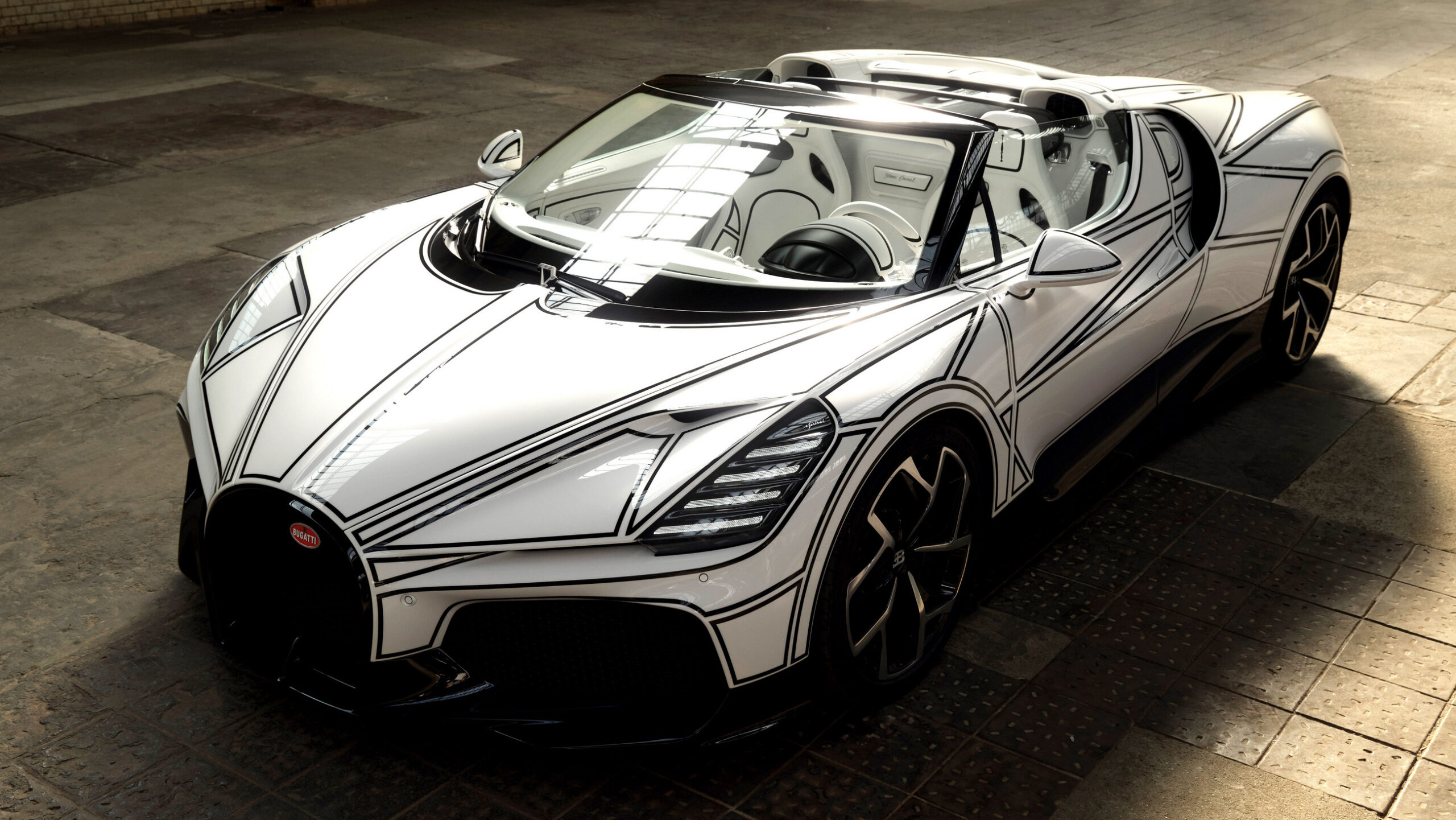
Blanc Éternel Hides Its Speed Behind a Gas Cap
Bugatti built a 261-mph roadster and made sure you'd notice the porcelain first.
From the other desks.

Gold Leaf on a Lacquer Dial, and the Weight of What That Costs
Awake's Frosted Leaf Royal Blue asks a question Vietnamese craft has never quite had to answer at this price.

ESPN Named Him. Then Unnamed Him. Nobody's Explaining the Gap.
A retraction without a reckoning is just a deleted link.

Hide My Email Has Been Showing Your Email
Apple's privacy flagship has a hole in it. They've known for over a year.